WVXU: How drones can slow spread of COVID-19
UC aerospace engineer says drones are showing up in novel applications

Cincinnati Public Radio's WVXU talked to University of Cincinnati aerospace engineering professor Kelly Cohen about the novel ways drones are being deployed during the coronavirus pandemic.
Cohen, the interim head of UC's Department of Aerospace Engineering and Engineering Mechanics, told WVXU that unmanned aerial vehicles, or UAVs, can deliver medical supplies, antibody tests, vaccines or personal protective equipment safely without risk of spreading infection.
Cohen oversees the UAV Master Lab in UC's College of Engineering and Applied Science, where researchers are developing automated navigation systems using artificial intelligence. UC is developing new drone applications to respond to a disaster, conduct inspections and manage a crisis.
UC is working with the U.S. Air Force Research Lab, among other partners, to coordinate swarms of drones that work in tandem for search and rescue and other uses.
"There's a lot of activity happening. We have a very strong team of staff and very excited and motivated students," Cohen told WVXU.
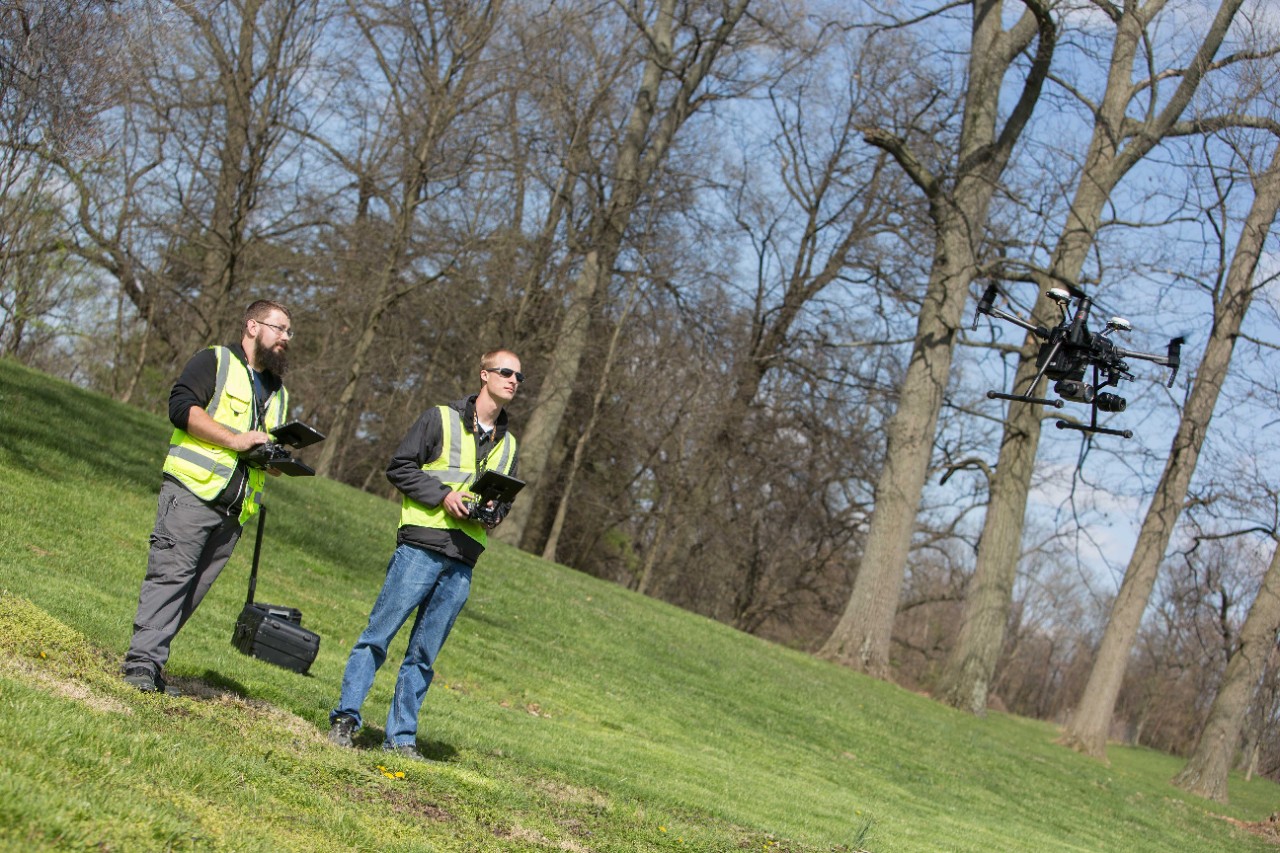
Featured image at top: UC research associate Bryan Brown, left, and UC student Austin Wessels operate a drone in this 2018 photo. UC collaborated with the Ohio Department of Transportation on a traffic-management project. Photo/Andrew Higley/UC Creative + Brand
More UC drone research

Photo/Andrew Higley/UC Creative + Brand
Impact Lives Here
The University of Cincinnati is leading public urban universities into a new era of innovation and impact. Our faculty, staff and students are saving lives, changing outcomes and bending the future in our city's direction. Next Lives Here.
Stay up on all UC's COVID-19 stories, read more #UCtheGood content, or take a UC virtual visit and begin picturing yourself at an institution that inspires incredible stories.
Related Stories
‘Designer drug’ shows early neuroprotective signal in acute ischemic stroke
October 28, 2025

Medscape highlighted new trial results led by the University of Cincinnati's Eva Mistry that found an experimental drug shows promise in protecting injured brain cells for patients with acute ischemic stroke.
Is menstrual fluid ‘the most overlooked opportunity’ in women’s health?
October 27, 2025

The Guardian recently reported that period blood has long been thought of as ‘stinky and useless’, but startups are exploring using the fluid to test for a wide range of health conditions — including endometriosis.
What is squalane, and how does it work to moisturize skin?
October 27, 2025

The University of Cincinnati's Kelly Dobos was featured in a Women's Health article discussing squalane, an ingredient being increasingly used in moisturizing skincare products.