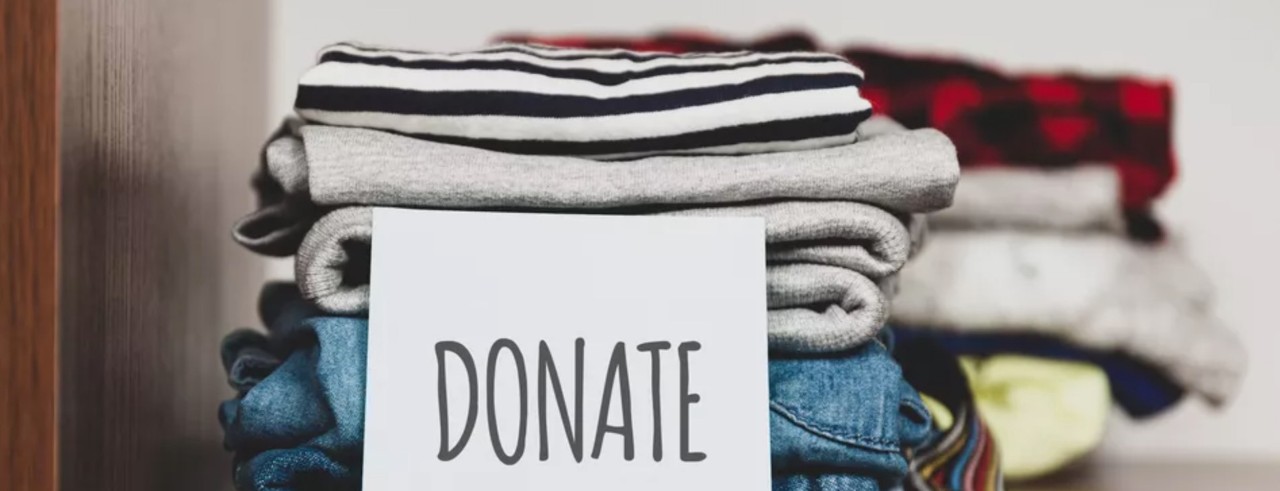
Mashable: How to donate clothes in the most ethical ways possible
UC's Liz Ricketts talks sustainable fashion and clothing donation

Liz Ricketts has seen where some of your donated used clothes end up.
The fashion designer and cofounder of the University of Cincinnati's Sustainable Fashion Initiative (a zero-waste effort within the university's fashion program) has spent years shuttling between the U.S. and Ghana since 2011. There, she's spent the bulk of her time in the Kantamanto Market, Ghana's largest secondhand clothing market, and possibly the biggest in West Africa, according to Rickett's nonprofit the OR Foundation, whose website will be up and running. Her U.S.-based foundation has worked in Ghana since 2009 and aims to challenge consumer behavior by educating people on the fashion industry.
Ricketts, an adjunct instructor in UC's College of Design, Architecture, Art, and Planning, spoke to Mashable about ethical clothing donation, including advice on which clothes to donate and which to repurpose, identifying the best organizations to donate to and how donate without creating more waste. Read the full story.
Related Stories
‘Designer drug’ shows early neuroprotective signal in acute ischemic stroke
October 28, 2025

Medscape highlighted new trial results led by the University of Cincinnati's Eva Mistry that found an experimental drug shows promise in protecting injured brain cells for patients with acute ischemic stroke.
Is menstrual fluid ‘the most overlooked opportunity’ in women’s health?
October 27, 2025

The Guardian recently reported that period blood has long been thought of as ‘stinky and useless’, but startups are exploring using the fluid to test for a wide range of health conditions — including endometriosis.
What is squalane, and how does it work to moisturize skin?
October 27, 2025

The University of Cincinnati's Kelly Dobos was featured in a Women's Health article discussing squalane, an ingredient being increasingly used in moisturizing skincare products.