Wall Street Journal: The human and physical logistics behind COVID vaccine rollouts
UC emergency medicine expert shares insight on how COVID-19 vaccines will be distributed

As states and hospitals in the United States race to roll out the first COVID-19 vaccines, the Wall Street Journal talked to a hospital administrator and immunization expert about the logistical challenges involved in this first phase of the vaccination process.

Dustin Calhoun, MD, of the Department of Emergency Medicine at the UC College of Medicine. Photo/Colleen Kelley/ UC Creative + Brand
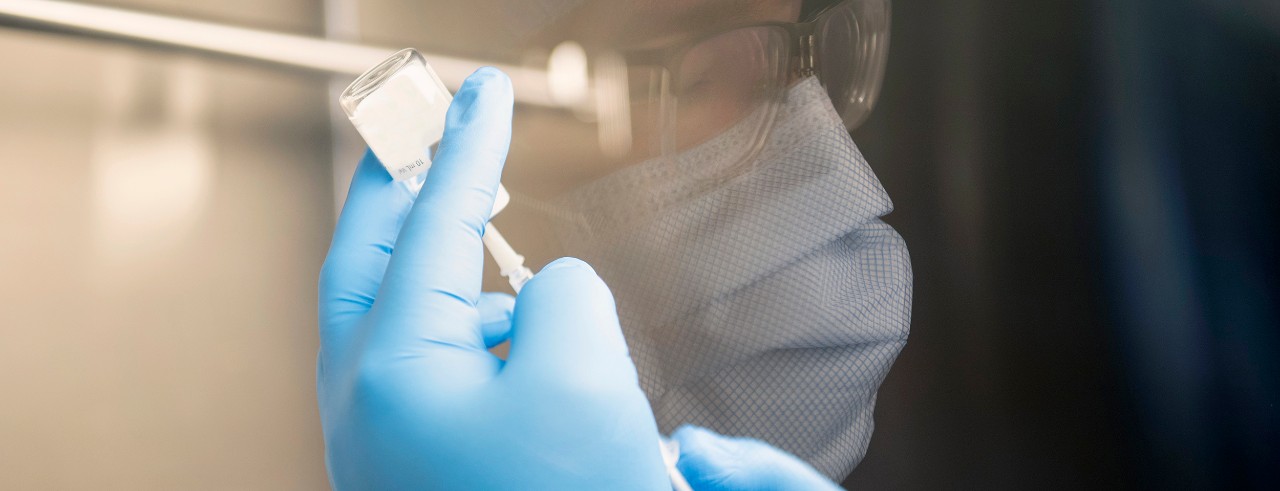
University of Cincinnati Medical Center will be one of the locations distributing the Pfizer COVID-19 vaccine. Dustin Calhoun, MD, in the Department of Emergency Medicine at the UC College of Medicine, says in Ohio, the vaccine will be distributed in lots of 975 doses.
"The prepositioning sites will probably be receiving one package each initially, and then significantly larger amounts flowing after that," says Calhoun. "Any facility that needs a smaller amount than the 975 of the Pfizer vaccine, will be receiving it after it is re-processed through the state of Ohio into smaller lots of about 100 doses."
Calhoun says the initial rollout of the vaccine to frontline health care workers will help guide the process of giving it to the general population once the vaccine is more widely available.
Watch the full video report here.
Next Lives Here
The University of Cincinnati is classified as a Research 1 institution by the Carnegie Commission and is ranked in the National Science Foundation's Top-35 public research universities. UC's medical, graduate and undergraduate students and faculty investigate problems and innovate solutions with real-world impact. Next Lives Here.
Related Stories
‘Designer drug’ shows early neuroprotective signal in acute ischemic stroke
October 28, 2025

Medscape highlighted new trial results led by the University of Cincinnati's Eva Mistry that found an experimental drug shows promise in protecting injured brain cells for patients with acute ischemic stroke.
Is menstrual fluid ‘the most overlooked opportunity’ in women’s health?
October 27, 2025

The Guardian recently reported that period blood has long been thought of as ‘stinky and useless’, but startups are exploring using the fluid to test for a wide range of health conditions — including endometriosis.
What is squalane, and how does it work to moisturize skin?
October 27, 2025

The University of Cincinnati's Kelly Dobos was featured in a Women's Health article discussing squalane, an ingredient being increasingly used in moisturizing skincare products.