Undark: Rural America tackles vaccine distribution
UC epidemiologist Diego Cuadros says COVID-19 could linger in rural areas

The science magazine Undark talked to University of Cincinnati epidemiologist Diego Cuadros about what to expect as COVID-19 vaccinations are administered in the United States.
Cuadros, director of UC's Health Geography and Disease Modeling Lab, has helped track the spread of coronavirus across Ohio and elsewhere as part of UC's Geospatial Health Advising Group. Composed of health, geography and statistical modeling experts from the UC College of Pharmacy and the UC College of Arts and Sciences, the UC group formed in the spring to track the virus and provide guidance for health officials.
Cuadros, an assistant professor of geography in UC's College of Arts and Sciences, tells Undark that vaccinations could be slower to reach everyone in rural areas. Rural residents are less likely to get a flu shot than people who live in urban areas.
"Think about a person who needs to drive one hour for a shot then do the same 20 days later for a second shot," Cuadros said. "If it's a person who maybe doesn't think this is too important, or has some misconception about vaccines, this is going to be extremely challenging."
Cuadros told Undark that the virus might linger in pockets of rural America, re-emerging into the broader population and compromising efforts to get the virus under control.
In November, UC's Geospatial Health Advising Group warned that mortality rates from COVID-19 were surging in rural America, which was a growing concern because rural areas have comparatively fewer health care resources.
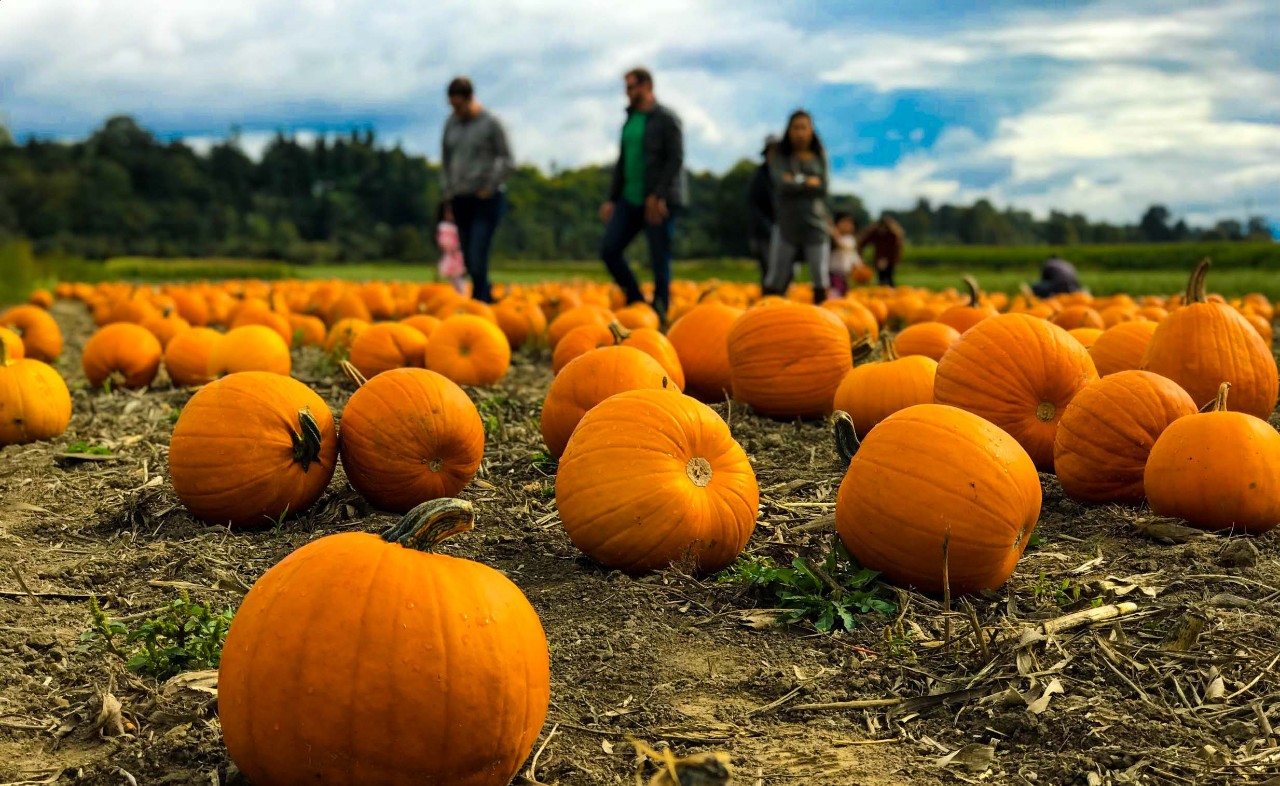
Featured image at top: A pumpkin patch. UC assistant professor Diego Cuadros has been tracking COVID-19 across rural America. Photo/Marius Ciocirlan/Unsplash

UC epidemiologist Diego Cuadros has been tracking the spread of coronavirus across Ohio and the United States for UC's Geospatial Health Advising Group. Photo/Andrew Higley/UC Creative + Brand
Related Stories
‘Designer drug’ shows early neuroprotective signal in acute ischemic stroke
October 28, 2025

Medscape highlighted new trial results led by the University of Cincinnati's Eva Mistry that found an experimental drug shows promise in protecting injured brain cells for patients with acute ischemic stroke.
Is menstrual fluid ‘the most overlooked opportunity’ in women’s health?
October 27, 2025

The Guardian recently reported that period blood has long been thought of as ‘stinky and useless’, but startups are exploring using the fluid to test for a wide range of health conditions — including endometriosis.
What is squalane, and how does it work to moisturize skin?
October 27, 2025

The University of Cincinnati's Kelly Dobos was featured in a Women's Health article discussing squalane, an ingredient being increasingly used in moisturizing skincare products.