Healthline: Vaccinating people with high risk for COVID-19 isn’t quickest way to herd immunity
UC expert says most COVID-19 deaths are in those over 60 and those with higher risk conditions

Carl Fichtenbaum, MD, of the Division of Infectious Diseases at the UC College of Medicine was one of several experts interviewed for an article on what COVID-19 vaccination strategy is the quickest way to herd immunity. The Moderna and Pfizer vaccines are being distributed to frontline health care workers and those at highest risk, with the thinking being that method will achieve herd immunity in the fastest manner.
However, a study from the NYU Tandon School of Engineering recently developed a novel open-source platform that’s able to create predictive models of COVID-19.
Their data shows this approach might not be the best way to beat COVID-19.

Carl Fichtenbaum, MD, of the Division of Infectious Diseases at the UC College of Medicine/Photo/Joe Fuqua II/UC Creative + Brand
Fichtenbaum says he thinks the current strategy is the best way to go.
“When you look at who is dying from this disease, by far away, it is those older than age 60 and with higher-risk conditions. This accounts for more than 75% of the deaths and most hospitalizations,” said Fichtenbaum. “So, vaccinate those at risk, and they will be protected, lowering the numbers of people being hospitalized or dying.”
Fichtenbaum was also interviewed by Bill Cunningham on 700 WLW about the ability of the COVID-19 vaccines to fight virus variants that are emerging. Listen to that interview here.
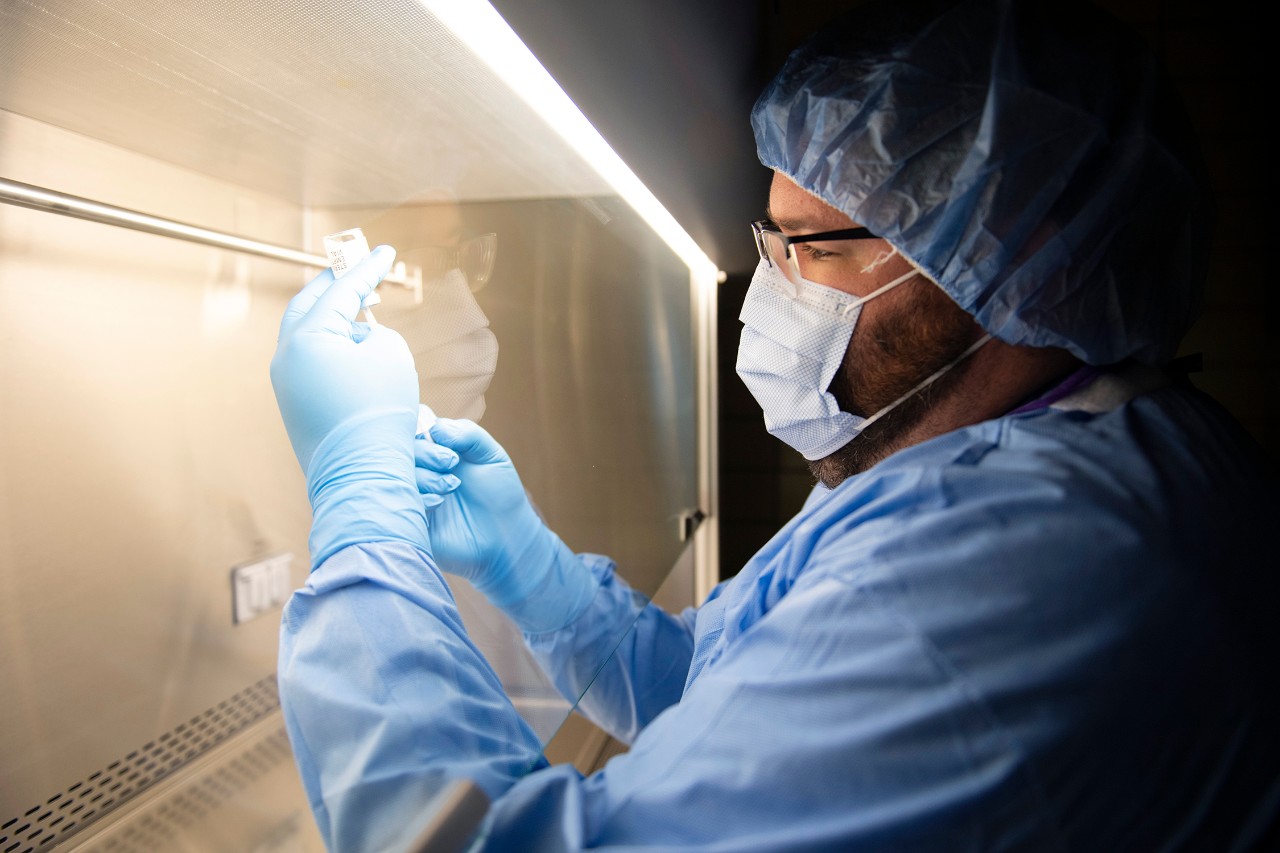
Lead photo/Colleen Kelley/UC Creative + Brand.
Next Lives Here
The University of Cincinnati is classified as a Research 1 institution by the Carnegie Commission and is ranked in the National Science Foundation's Top-35 public research universities. UC's medical, graduate and undergraduate students and faculty investigate problems and innovate solutions with real-world impact. Next Lives Here.
Related Stories
‘Designer drug’ shows early neuroprotective signal in acute ischemic stroke
October 28, 2025

Medscape highlighted new trial results led by the University of Cincinnati's Eva Mistry that found an experimental drug shows promise in protecting injured brain cells for patients with acute ischemic stroke.
Is menstrual fluid ‘the most overlooked opportunity’ in women’s health?
October 27, 2025

The Guardian recently reported that period blood has long been thought of as ‘stinky and useless’, but startups are exploring using the fluid to test for a wide range of health conditions — including endometriosis.
What is squalane, and how does it work to moisturize skin?
October 27, 2025

The University of Cincinnati's Kelly Dobos was featured in a Women's Health article discussing squalane, an ingredient being increasingly used in moisturizing skincare products.