Medscape: Recombinant IFN plus antivirals may boost COVID-19 recovery versus traditional IFN
UC expert points out weaknesses in the research

Reuters Health, as reported by Medscape, published a story on research out of China showing that in patients with moderate to severe COVID-19, recombinant super-compound interferon (rSIFN-co) plus baseline antivirals was associated with a shorter time to clinical improvement than the same regimen using traditional interferon-alpha. Carl Fichtenbaum, MD, of the Division of Infectious Diseases at the UC College of Medicine was one of the experts who reacted to the study.

Carl Fichtenbaum, MD, of the Division of Infectious Diseases at the UC College of Medicine/Photo/Colleen Kelley/UC Creative + Brand
"The study shows a minimal benefit to the re-engineered version of interferon alfa. If you look at 28 days, no difference," Fichtenbaum says. "So, it was really a minor difference at days seven and 14. If you look closely at the article, by the 'ordinal scale' that most researchers use, no difference was seen. No data was presented on virologic response."
He added that more information is needed to validate the findings.
"We need a lot more data and proof before I would use this," he says. "And the lack of a control group that got just standard of care is a big weakness of this study."
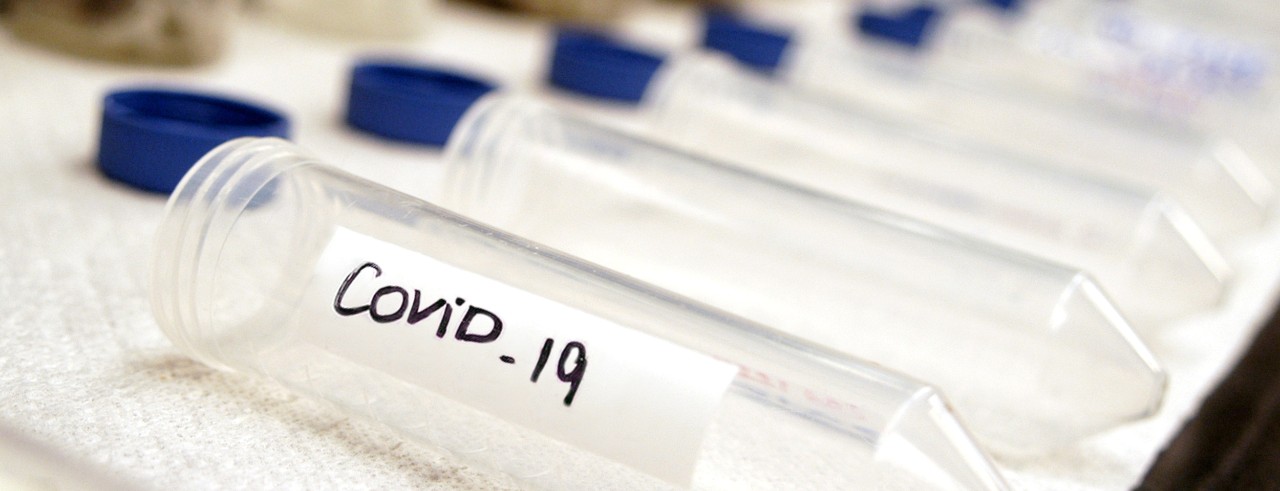
Lead image/Colleen Kelley/UC Creative + Brand
Impact Lives Here
The University of Cincinnati is leading public urban universities into a new era of innovation and impact. Our faculty, staff and students are saving lives, changing outcomes and bending the future in our city's direction. Next Lives Here.
Related Stories
‘Designer drug’ shows early neuroprotective signal in acute ischemic stroke
October 28, 2025

Medscape highlighted new trial results led by the University of Cincinnati's Eva Mistry that found an experimental drug shows promise in protecting injured brain cells for patients with acute ischemic stroke.
Is menstrual fluid ‘the most overlooked opportunity’ in women’s health?
October 27, 2025

The Guardian recently reported that period blood has long been thought of as ‘stinky and useless’, but startups are exploring using the fluid to test for a wide range of health conditions — including endometriosis.
What is squalane, and how does it work to moisturize skin?
October 27, 2025

The University of Cincinnati's Kelly Dobos was featured in a Women's Health article discussing squalane, an ingredient being increasingly used in moisturizing skincare products.