WVXU: UC looking For COVID-19 research volunteers
COMPASS study holding local enrollment events

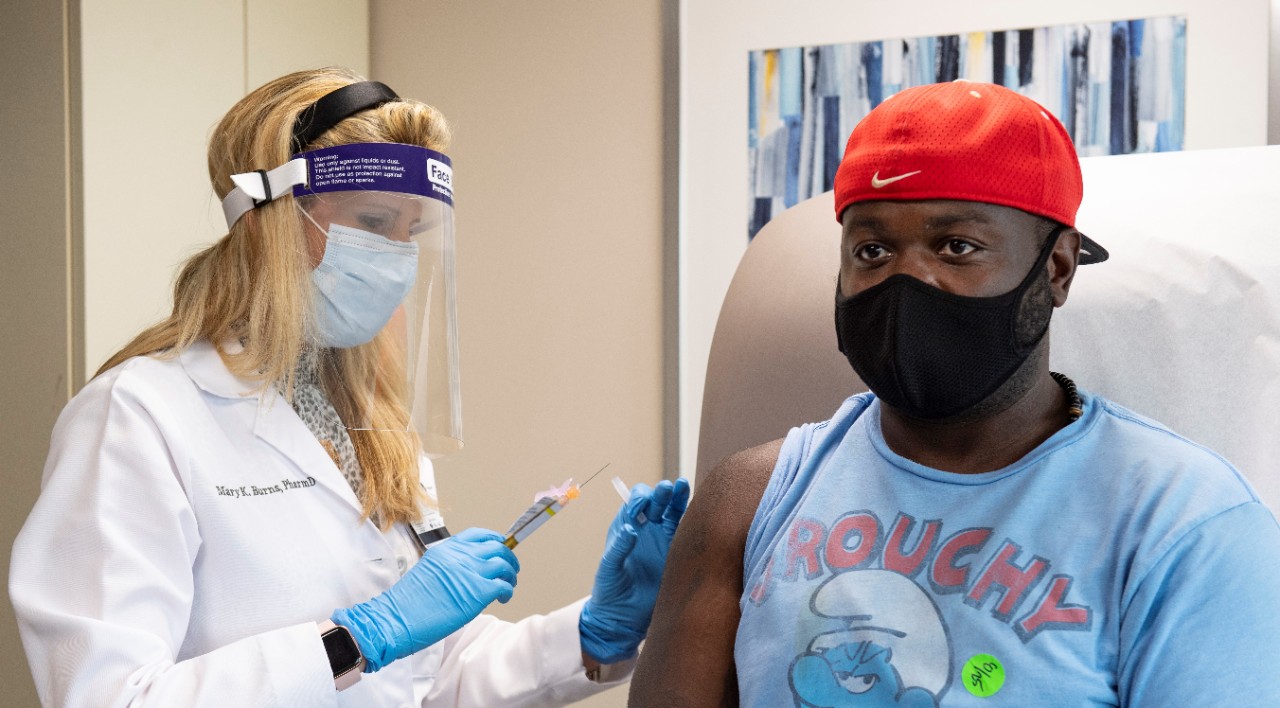
UC researchers are part of the worldwide effort to better understand COVID-19 and how it has impacted communities. Since February of this year, they've relied on volunteers to provide information about how they've experienced the pandemic. But the window to help with the nationwide Community Prevalence of SARS-CoV-2 Study, called COMPASS, is closing.
In a story on the study published by WVXU, Maggie Powers-Fletcher, PhD, assistant professor in the Division of Infectious Diseases at the UC College of Medicine, says the trial involves completing a questionnaire and providing blood and nasal swab samples.
"Getting that information combined allows us to plan future interventions and better understand what happens in a pandemic," she said.

Maggie Powers-Fletcher, MD, of the Division of Infectious Diseases at the UC College of Medicine/Photo/Colleen Kelley/UC Creative + Brand
Powers-Fletcher told WVXU the questionnaire covers a wide range of information.
The questionnaire, she says, runs the gamut.
"So, whether there's any impact on social social activities, was their impact on mental health? What are public perceptions of the pandemic and disease and virus, and just a better understanding of what was going on with community members during the pandemic," she says. "This provides a lot of helpful information about the community mindset and the community impact."
The blood and nasal swab samples, she says, test for COVID-19 and antibodies. Due to lack of testing early in the pandemic and asymptomatic cases, it's not completely accurate to ask people whether they've contracted COVID-19.
Read more about UC's role in the COMPASS trial here.
Lead photo/Colleen Kelley/UC Creative + Brand
Next Lives Here
The University of Cincinnati is classified as a Research 1 institution by the Carnegie Commission and is ranked in the National Science Foundation's Top-35 public research universities. UC's medical, graduate and undergraduate students and faculty investigate problems and innovate solutions with real-world impact. Next Lives Here.
Related Stories
‘Designer drug’ shows early neuroprotective signal in acute ischemic stroke
October 28, 2025

Medscape highlighted new trial results led by the University of Cincinnati's Eva Mistry that found an experimental drug shows promise in protecting injured brain cells for patients with acute ischemic stroke.
Is menstrual fluid ‘the most overlooked opportunity’ in women’s health?
October 27, 2025

The Guardian recently reported that period blood has long been thought of as ‘stinky and useless’, but startups are exploring using the fluid to test for a wide range of health conditions — including endometriosis.
What is squalane, and how does it work to moisturize skin?
October 27, 2025

The University of Cincinnati's Kelly Dobos was featured in a Women's Health article discussing squalane, an ingredient being increasingly used in moisturizing skincare products.