The Atlantic: Why are some mammals killers?
UC evolutionary biologist Elizabeth Hobson explains lethal intraspecies aggression

The Atlantic spoke to a University of Cincinnati biologist about why murder isn’t unique to humans.
Some mammals kill other members of their kind. But the motives aren’t always clear, UC behavioral ecologist and evolutionary biologist Elizabeth Hobson said.
“Humans answer when you ask those questions,” she told the Atlantic. “They might lie, but at least they can answer.”

UC assistant professor Elizabeth Hobson. Photo/Andrew Higley/UC Creative + Brand
Hobson, an assistant professor in UC's College of Arts and Sciences, has studied the behavior of a variety of animals, including social birds such as monk parakeets and little blue penguins, in her Hobson Lab.
Male lions are known to engage in lethal battles with rivals and kill cubs when they take over prides. Chimpanzees have been known to kill other chimpanzees in brutal group fights some researchers have likened to warfare.
The Atlantic reported on a study by the Arid Zones Experimental Station in Spain on “adulticide,” the act of an adult animal killing another adult of its kind. So far, researchers have documented 352 of the approximately 6,500 mammals that kill others. And there are likely more.
The study found that most mammal perpetrators were males that killed other males. And often they were during dominance battles to vie for a mate. Hoofed animals from antelope to bison to bighorn sheep engage in violent clashes, sometimes with lethal results.
Hobson, who was not part of the study, told the Atlantic, “Some things just happen — there’s a bad fight and one gets stabbed worse than the other.”
By studying lethal aggression in other mammals, researchers hope to gain insights into what can drive people to similar ends.
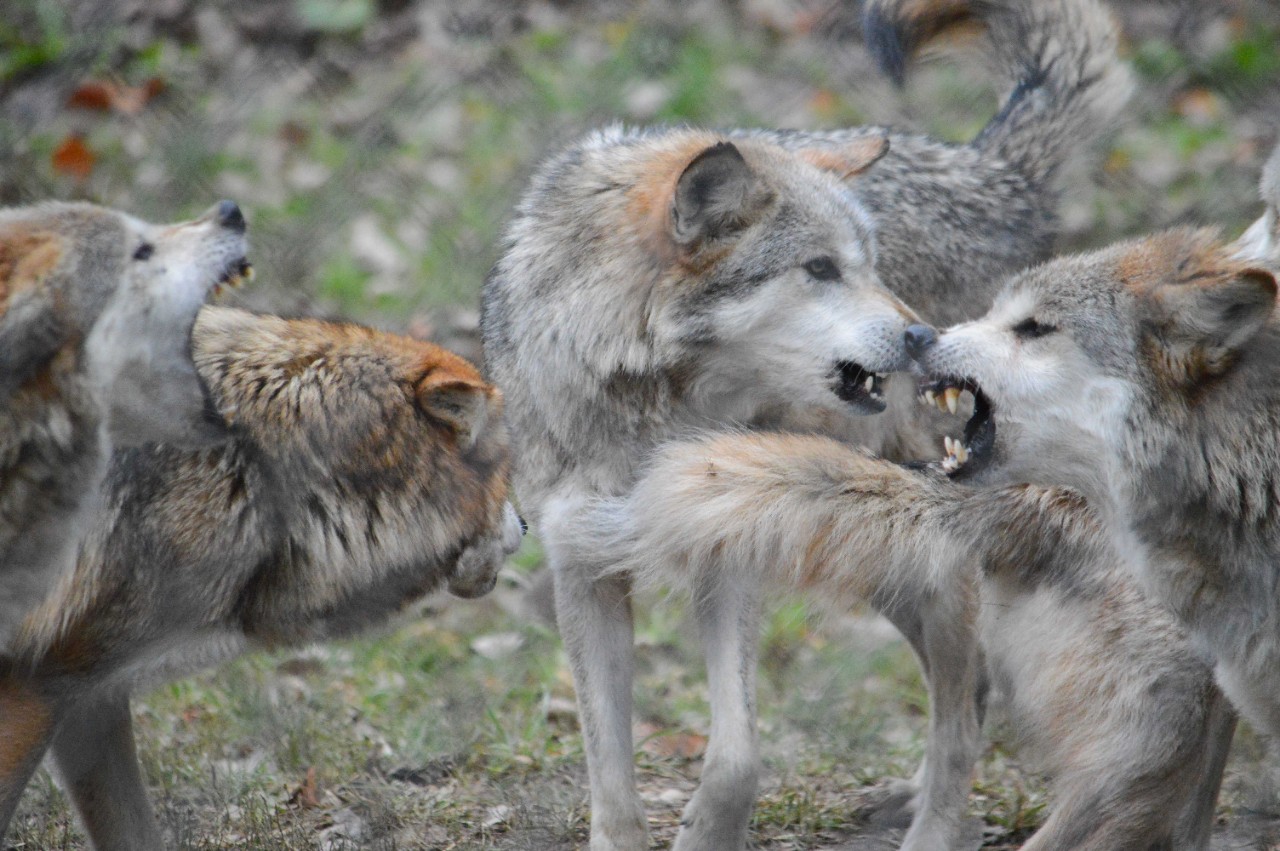
Featured image at top: Mexican wolves release aggression at the Columbus Zoo. Wild wolves are known to kill other adult wolves. Photo/Michael Miller

Hartebeest bucks refuse to give an inch in Uganda's Murchison Falls National Park. UC assistant professor Elizabeth Hobson said these battles can sometimes be lethal. Photo/Michael Miller
Related Stories
‘Designer drug’ shows early neuroprotective signal in acute ischemic stroke
October 28, 2025

Medscape highlighted new trial results led by the University of Cincinnati's Eva Mistry that found an experimental drug shows promise in protecting injured brain cells for patients with acute ischemic stroke.
Is menstrual fluid ‘the most overlooked opportunity’ in women’s health?
October 27, 2025

The Guardian recently reported that period blood has long been thought of as ‘stinky and useless’, but startups are exploring using the fluid to test for a wide range of health conditions — including endometriosis.
What is squalane, and how does it work to moisturize skin?
October 27, 2025

The University of Cincinnati's Kelly Dobos was featured in a Women's Health article discussing squalane, an ingredient being increasingly used in moisturizing skincare products.