Reader's Digest: World's greatest lost cities
Magazine cites UC associate professor's work in Pompeii, Italy

Reader's Digest cited the work of a University of Cincinnati archaeologist in a story on 20 lost cities.
The magazine highlighted the work of UC associate professor Steven Ellis in UC's College of Arts and Sciences, who has conducted research across Italy and Greece. Pompeii was buried in ash in 79 AD by a massive eruption of Mount Vesuvius. The devastated ruins were discovered in 1748 leading to centuries of discoveries.
"Pompeii as an archaeological site is the longest continually excavated site in the world," Ellis said.
Ellis joined UC in 2007 and serves as director of the Pompeii Archaeological Research Project: Porta Stabia. He is author of "The Roman Retail Revolution" and "The Making of Pompeii: Studies in the history and urban development of an ancient town."
Among the other "lost cities" highlighted: Machu PIcchu, Peru; Babylon, Iraq and Petra, Jordan.
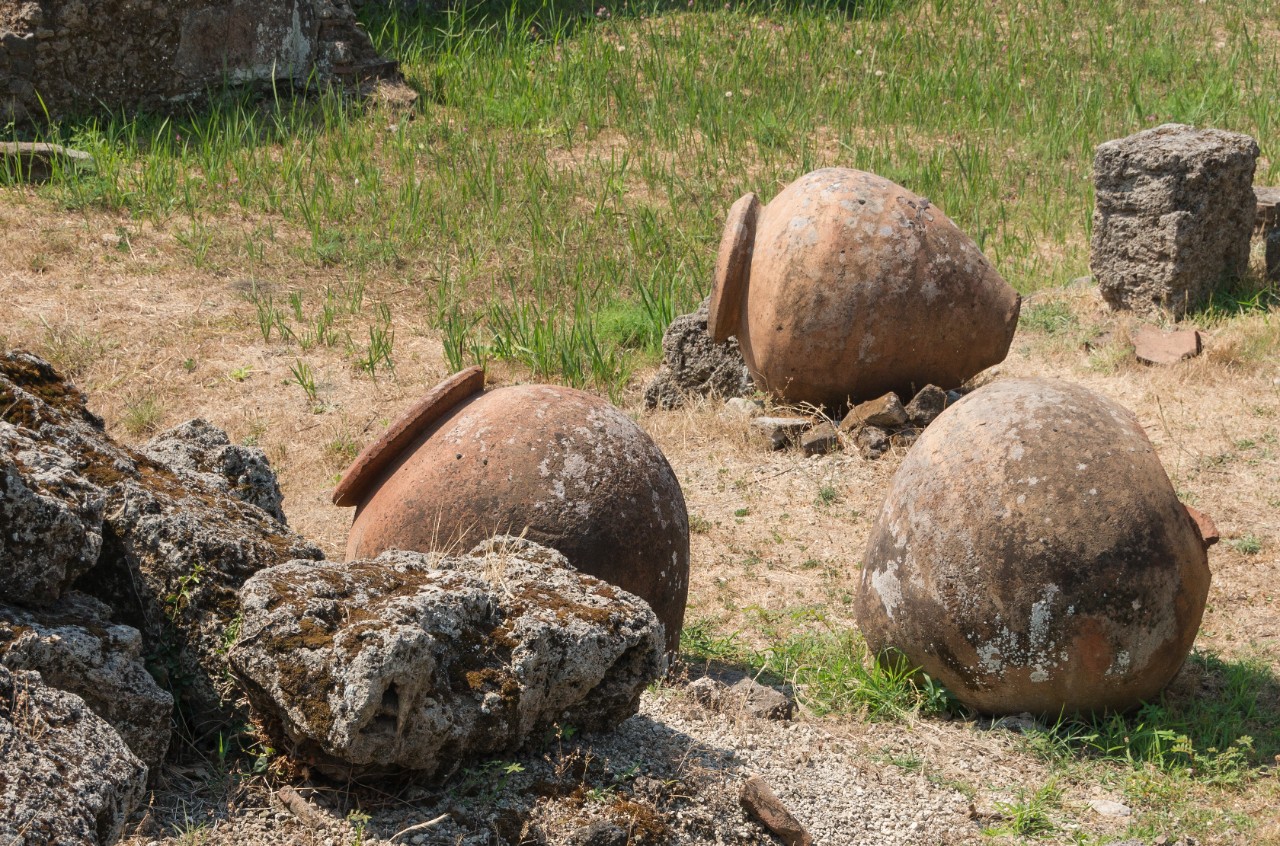
Featured image at top: Terracotta jars sit on the ground in Pompeii, Italy. Photo/Jebulon/Unsplash
Related Stories
‘Designer drug’ shows early neuroprotective signal in acute ischemic stroke
October 28, 2025

Medscape highlighted new trial results led by the University of Cincinnati's Eva Mistry that found an experimental drug shows promise in protecting injured brain cells for patients with acute ischemic stroke.
Is menstrual fluid ‘the most overlooked opportunity’ in women’s health?
October 27, 2025

The Guardian recently reported that period blood has long been thought of as ‘stinky and useless’, but startups are exploring using the fluid to test for a wide range of health conditions — including endometriosis.
What is squalane, and how does it work to moisturize skin?
October 27, 2025

The University of Cincinnati's Kelly Dobos was featured in a Women's Health article discussing squalane, an ingredient being increasingly used in moisturizing skincare products.