NYT: UC professor talks about science behind mammoth study
Strontium analysis allows researchers to peer back in time to see how animals lived

The New York Times turned to a University of Cincinnati expert in strontium analysis to explain how studying this element can help researchers better understand how extinct animals like woolly mammoths lived.
Brooke Crowley, an associate professor of geology and anthropology in UC's College of Arts and Sciences, has analyzed strontium, hydrogen and other elements to track the movements of hawks, jaguars and even extinct horses based on what they were eating — or more precisely, where they were eating.
Strontium is absorbed in the food chain and becomes a telltale marker for researchers to learn about the habitats important to animals, including long-dead woolly mammoths that roamed Alaska.
A study in the journal Science by the University of Alaska pieced together the 28-year life of a woolly mammoth they named Kik that roamed what is now the Arctic National Wildlife Refuge more than 17,000 years ago. The researchers were able to use strontium analysis of Kik's surviving tusks found in the permafrost to track his yearly movements.
The unique strontium signature from the food he ate each year was embedded in layers of the growing tusks that researchers examined. Another elemental signature in the tusks — nitrogen — suggested Kik died from starvation.
“It’s rather amazing how much one can learn from little tiny bits of material from a now-extinct animal,” Crowley told the New York Times. “I’m particularly impressed that the authors were able to track this individual mammoth’s movements for his entire life.”
Crowley, who was not involved in the University of Alaska study, has examined strontium in other collected Ice Age mammal specimens to understand their migrations and use of the landscape in North America.
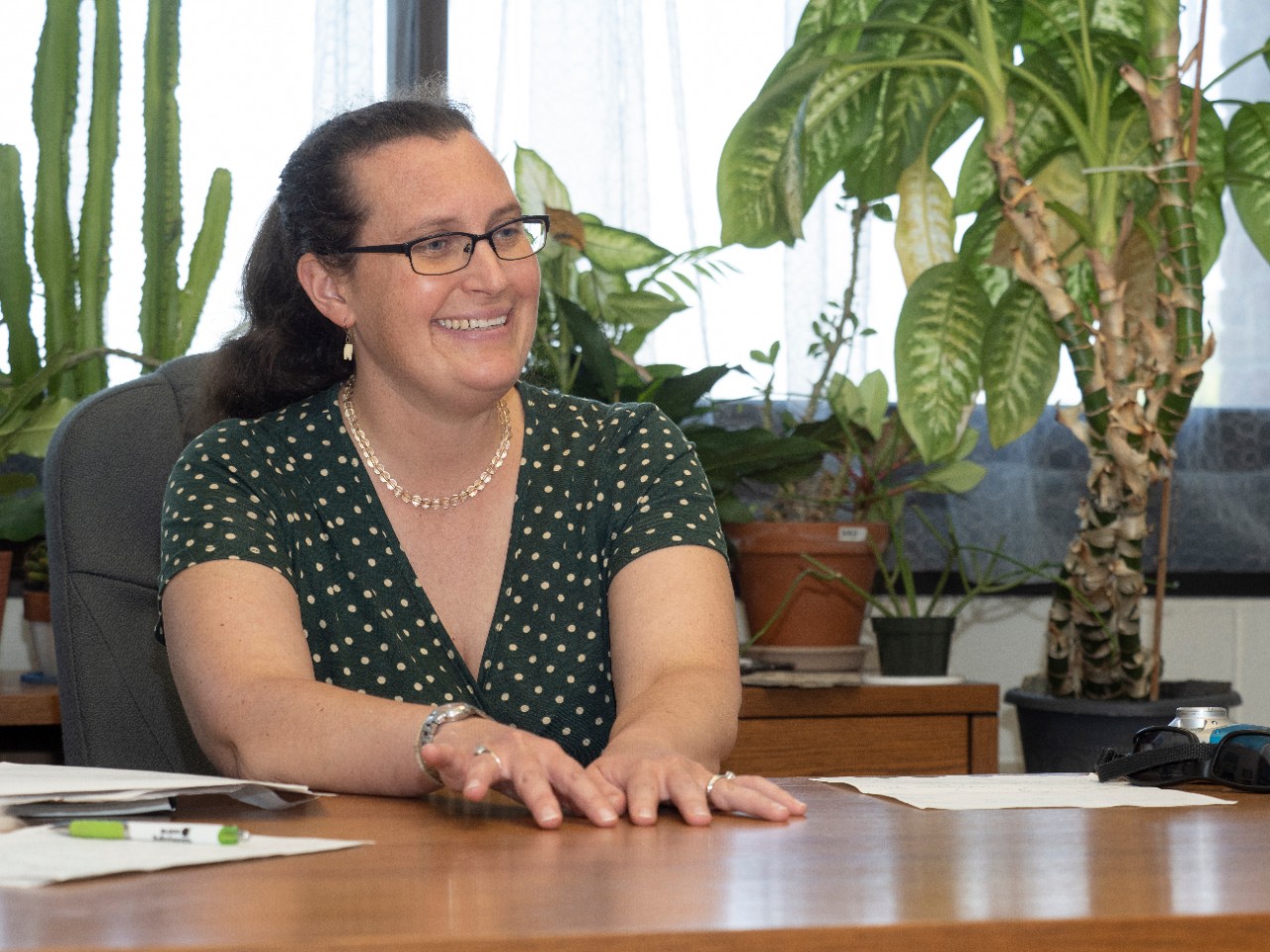
Featured image at top: Brooke Crowley is an associate professor of geology and anthropology in UC's College of Arts and Sciences. Photo/Jay Yocis/UC Creative + Brand

UC associate professor Brooke Crowley talked to the New York Times about how strontium analysis can help researchers learn more about extinct species. Photo/Joseph Fuqua II/UC Creative + Brand
More UC strontium research
Related Stories
‘Designer drug’ shows early neuroprotective signal in acute ischemic stroke
October 28, 2025

Medscape highlighted new trial results led by the University of Cincinnati's Eva Mistry that found an experimental drug shows promise in protecting injured brain cells for patients with acute ischemic stroke.
Is menstrual fluid ‘the most overlooked opportunity’ in women’s health?
October 27, 2025

The Guardian recently reported that period blood has long been thought of as ‘stinky and useless’, but startups are exploring using the fluid to test for a wide range of health conditions — including endometriosis.
What is squalane, and how does it work to moisturize skin?
October 27, 2025

The University of Cincinnati's Kelly Dobos was featured in a Women's Health article discussing squalane, an ingredient being increasingly used in moisturizing skincare products.