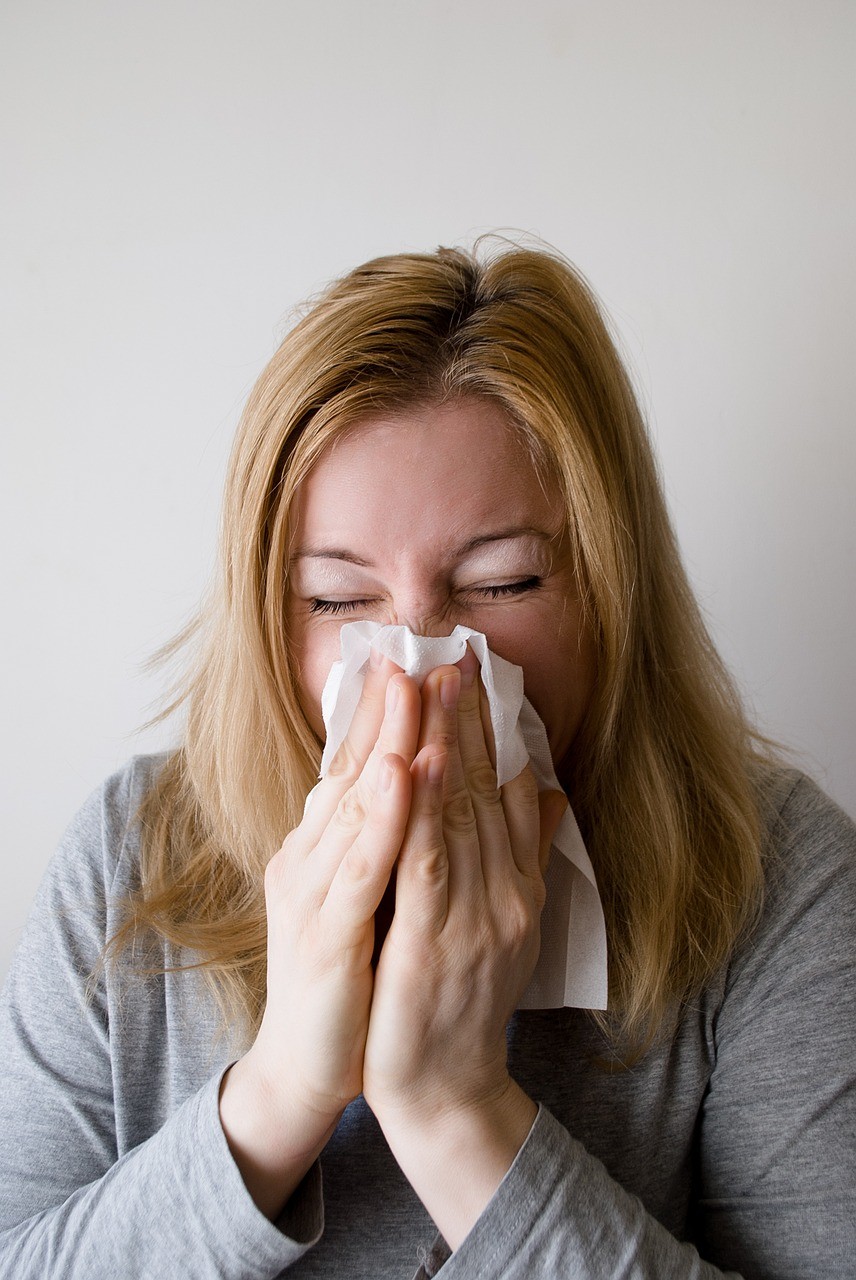
U.S. News & World Report: What to do for a stuffy nose
UC expert explains the science behind this common problem

Having a stuffy nose is usually nothing to worry about. It's a common and uncomfortable condition, that typically is not a sign of a serious health problem. It’s mostly just uncomfortable, with varying symptoms. U.S. News & World Report published a story looking at the symptoms and causes of a stuffy nose, and one of the main sources cited was Ahmad Sedaghat, an otolaryngologist and director of Rhinology, Allergy and Anterior Skull-Based Surgery at the UC College of Medicine.
“For some people, it’s having a lot of mucus in the nose. For others, it’s a feeling that the airways are blocked and there’s a diminished sense of smell,” he says.

Ahmad Sedaghat, MD, director of Rhinology, Allergy and Anterior Skull-Based Surgery at the UC College of Medicine/Photo/Colleen Kelley/UC Creative + Brand
Stuffy nose causes fall into two categories: temporary and fixed, the article says.
Temporary causes come and go (such as viral infections like a cold or allergic reactions to tree pollen or dust). They trigger a cascade of reactions from the immune system.
“The immune system recognizes a foreign invader and creates inflammation to fight it," Sedaghat says. "That leads to mucus production and the swelling of structures on each side of the nose called inferior turbinates. The turbinates have a lot of vascular channels that fill with blood, causing swelling of the turbinates, which creates a feeling of obstruction.”
A loss of sense of smell emerged early on as a key indicator of a potential COVID-19 infection, and Sedaghat and his colleagues were among the first in the world to make the connection between COVID-19 and loss of smell and taste in the first months of the pandemic. You can read more about that here.
Sedaghat says that’s because the COVID virus can infect the taste buds. “When you lose smell with a stuffy nose, you can still taste sweet, salty, bitter or savory. But that ability is wiped out with COVID. There’s no taste at all,” he says.
You don’t have to do anything to treat the stuffy nose of an allergy or a cold. “An allergy or cold will get better on its own. It won’t cause any significant problem beyond decreased quality of life until you feel better,” Sedaghat says.
Staving off a stuffy nose is especially important during a pandemic and Sedaghat suggests using a saline rinse.
“It keeps the lining of the nose moist, which helps prevent viral particles from getting in, and it helps rinse out viral particles that can accumulate in mucus particles over the course of the day,” Sedaghat says.
He also recommends wearing a mask.
We’ve had a dramatic reduction in the number of cold and flu cases and even allergies because people have been wearing their masks. There’s definitely a link there,” Sedaghat says.
Next Lives Here
The University of Cincinnati is classified as a Research 1 institution by the Carnegie Commission and is ranked in the National Science Foundation's Top-35 public research universities. UC's medical, graduate and undergraduate students and faculty investigate problems and innovate solutions with real-world impact. Next Lives Here.
Related Stories
‘Designer drug’ shows early neuroprotective signal in acute ischemic stroke
October 28, 2025

Medscape highlighted new trial results led by the University of Cincinnati's Eva Mistry that found an experimental drug shows promise in protecting injured brain cells for patients with acute ischemic stroke.
Is menstrual fluid ‘the most overlooked opportunity’ in women’s health?
October 27, 2025

The Guardian recently reported that period blood has long been thought of as ‘stinky and useless’, but startups are exploring using the fluid to test for a wide range of health conditions — including endometriosis.
What is squalane, and how does it work to moisturize skin?
October 27, 2025

The University of Cincinnati's Kelly Dobos was featured in a Women's Health article discussing squalane, an ingredient being increasingly used in moisturizing skincare products.