Cincinnati.com: Cincinnati Children's study: COVID-19 cases, quarantines lower in schools with mask mandates
Research by UC pediatrics expert says vaccines and masks can keep kids in the classroom

New research looking at COVID-19 caseloads in seven Cincinnati area schools attempted to learn whether universal masking really makes a difference. The study, lead by Katherine Auger, MD, of the Department of Pediatrics in the UC College of Medicine and associate chair of outcomes in the Department of Pediatrics at Cincinnati Children's shows that mask mandates are effective. In a story published on Cincinnati.com, the study found that the rate of students getting diagnosed with COVID-19 was 78% higher in the partially masked schools than those that had universal masking.
It also showed that the rate of students being quarantined was 60% higher in the partially masked schools and that the ratio of quarantines per COVID-19 case was 30% higher in the partially masked schools.

Katherine Auger, MD, of the Department of Pediatrics in the UC College of Medicine and associate chair of outcomes in the Department of Pediatrics at Cincinnati Children’s/Photo/Cincinnati Children's
The key takeaway is that the districts with universal masking had a significantly lower rate of COVID-19 cases, and quarantines were lower too.
"We were struck by how big that difference was," Auger said, especially in such a short period of time. The study was done in about three weeks, from the beginning of the school year to Sept. 7.
It has been Auger's job during the pandemic to focus on COVID-19 policies that affect children, including school closings, Cincinnati.com reported.
Auger's study used data from seven school districts with a total of 64,500 students. Three districts require universal masking (including one that switched to full masking after a week of school), four require masking for kids in kindergarten through sixth grade but not for kids in grades seven through 12. Five of the districts also provided the data on quarantines.
She told Cincinnati.com universal masking not only keeps unvaccinated students and staff safe from COVID-19, but is helpful to young children, who need to see role models in the adults and older students around them. And, it's less stressful for teenagers, who are saddled with worries about fitting in with other students.
"Masks work. They are effective. They do change the number of cases we see in schools. And masks are safe," she said.
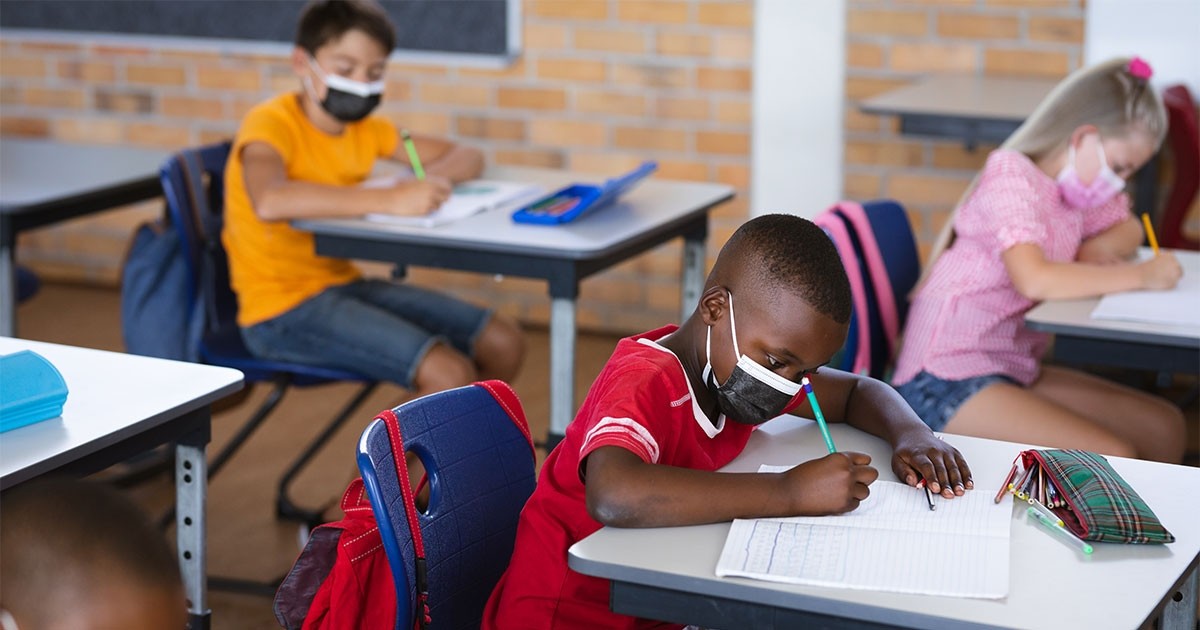
Lead photo/CDC
Next Lives Here
The University of Cincinnati is classified as a Research 1 institution by the Carnegie Commission and is ranked in the National Science Foundation's Top-35 public research universities. UC's medical, graduate and undergraduate students and faculty investigate problems and innovate solutions with real-world impact. Next Lives Here.
Related Stories
‘Designer drug’ shows early neuroprotective signal in acute ischemic stroke
October 28, 2025

Medscape highlighted new trial results led by the University of Cincinnati's Eva Mistry that found an experimental drug shows promise in protecting injured brain cells for patients with acute ischemic stroke.
Is menstrual fluid ‘the most overlooked opportunity’ in women’s health?
October 27, 2025

The Guardian recently reported that period blood has long been thought of as ‘stinky and useless’, but startups are exploring using the fluid to test for a wide range of health conditions — including endometriosis.
What is squalane, and how does it work to moisturize skin?
October 27, 2025

The University of Cincinnati's Kelly Dobos was featured in a Women's Health article discussing squalane, an ingredient being increasingly used in moisturizing skincare products.