WVXU: UC Health first in region to use spray on skin for burn patients
UC surgery professor says spray could have widespread uses

A spray-on skin product called RECELL is now approved for both adults and children, sparing them the unnecessary pain of dozens of skin grafts. In a story produced by WVXU, UC Health said the health system is the first in the region to use the product.
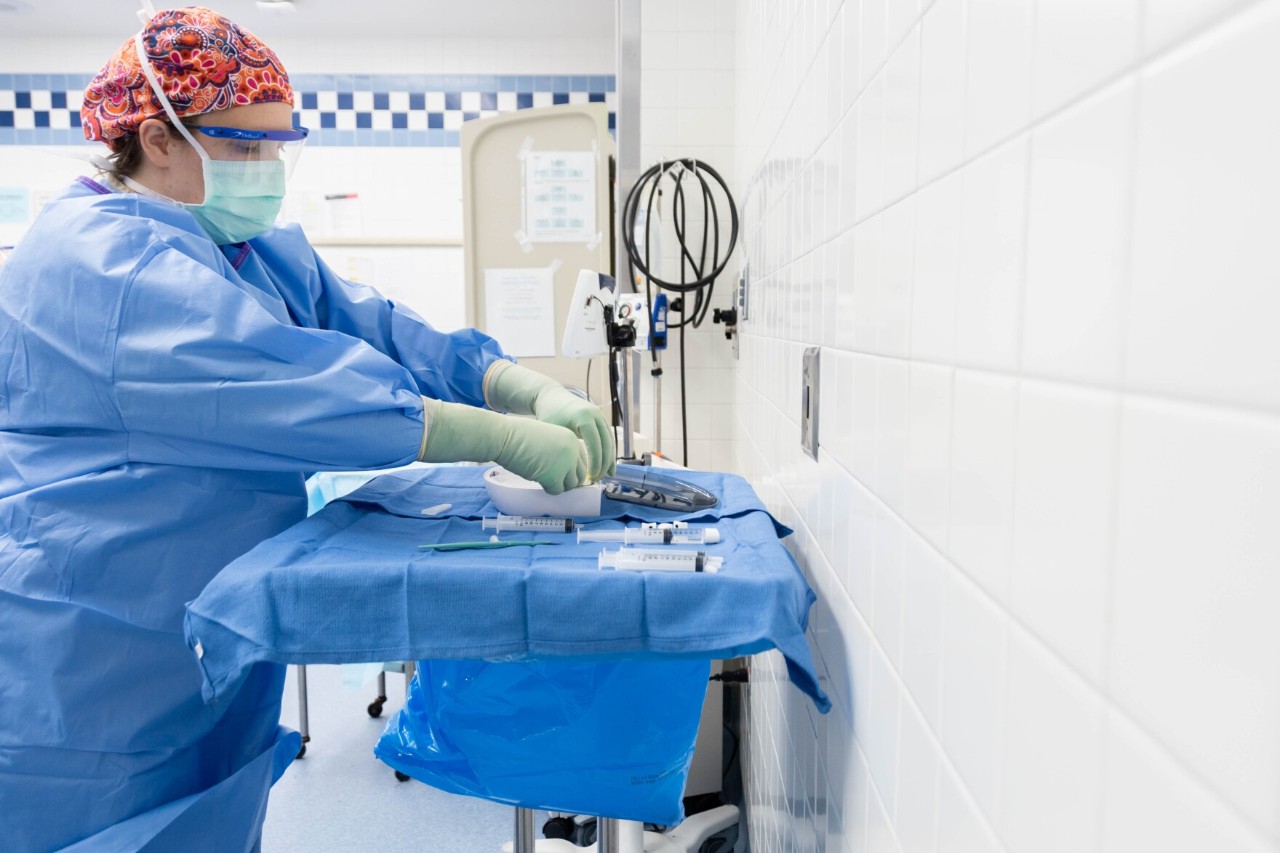
Julia Slater, MD, assistant professor in the Department of Surgery at the UC College of Medicine. assistant medical director of the UC Burn Center, and a UC Health physician said the RECELL kit comes with everything needed to treat burn patients.

Julia Slater, MD, assistant professor in the Department of Surgery at the UC College of Medicine/Photo/UC Creative + Brand
“It actually has an area where you add powder that’s reconstituted that contains enzymes," she said. "And that’s what helps break down the sample of skin into something that you can create a slurry that you can spray on.”
The spray is applied in the operating room and can make a small piece of skin go 80 times further with RECELL.
The technology is made by Avita, and trypsin is the only enzyme Avita lists, the rest are proprietary. Slater says some of the other things like melanocytes (color of the skin) and keratinocytes (which give strength) are present in the liquid she puts into a syringe and sprays onto the wound beds.
UC has used it on a handful of patients in the last six months. It is expensive, but insurance pays for it. Recently, its manufacturer announced Medicare and Medicaid would cover it.
Dr. Slater sees RECELL helping patients with congenital disorders of the skin, like blistering, as well as more widespread use for patients with smaller burns in outpatient facilities.
Lead photo of Julia Slater, MD/UC Health
Next Lives Here
The University of Cincinnati is classified as a Research 1 institution by the Carnegie Commission and is ranked in the National Science Foundation's Top-35 public research universities. UC's medical, graduate and undergraduate students and faculty investigate problems and innovate solutions with real-world impact. Next Lives Here.
Related Stories
‘Designer drug’ shows early neuroprotective signal in acute ischemic stroke
October 28, 2025

Medscape highlighted new trial results led by the University of Cincinnati's Eva Mistry that found an experimental drug shows promise in protecting injured brain cells for patients with acute ischemic stroke.
Is menstrual fluid ‘the most overlooked opportunity’ in women’s health?
October 27, 2025

The Guardian recently reported that period blood has long been thought of as ‘stinky and useless’, but startups are exploring using the fluid to test for a wide range of health conditions — including endometriosis.
What is squalane, and how does it work to moisturize skin?
October 27, 2025

The University of Cincinnati's Kelly Dobos was featured in a Women's Health article discussing squalane, an ingredient being increasingly used in moisturizing skincare products.