Grant will help College of Medicine promote confidence in COVID-19 vaccines
College researchers will work with community partners in project

The University of Cincinnati College of Medicine is one of five medical schools in the country to receive a grant from the Association of American Medical Colleges to foster greater collaboration between the college and community partners in promoting confidence in COVID-19 vaccines.
The Building Trust and Confidence Through Partnerships grant will help train community volunteers and community health workers who will, in turn, educate groups in the community, says Jack Kues, PhD, associate dean for continuous professional development and professor emeritus in the Department of Family and Community Medicine. This project will attempt to reach individuals in target communities with education and materials making them better informed about COVID and related vaccines with more people being vaccinated.
“We are building on work being done by the Cincinnati Health Department and a federally funded community education program called We Engage for Health, which is co-directed by Dr. Melinda Butsch-Kovacic from the UC College of Allied Health Sciences. This project targets Cincinnati communities where vaccination rates are very low and where we hope to have the greatest impact on COVID literacy. Although this grant is relatively small, it allows us to build on other projects related to COVID, community health literacy and academic-community partnerships,” Kues says.

Jack Kues, PhD
Joining in the $70,000 project is First Ladies for Health, a local volunteer group that leverages pastors’ wives and other church representatives to help parishioners and community members make informed decisions about their health.
“There is a great deal of trust within these congregations and many faculty and programs within the UC Academic Health Center have been partnering with First Ladies to provide health-related education and services,” Kues says. “First Ladies has been very successful promoting programs related to chronic health conditions and prevention and many congregations see First Ladies as a primary source of trusted information about these issues.”
Kues adds that the project is a continuation of work done through a Center for Clinical and Translational Science and Training grant, the COVID-19 Critical Community Challenge Grant, awarded in July 2020. That project gathered behavioral and attitudinal information related to COVID-19 and vaccinations through community surveys and focus groups. The goal was to use the data to develop interventions that would directly address the misinformation and concerns of the community related to COVID-19, preventive practices and vaccinations. The data from this project were the basis for the current AAMC grant, he says.
“It is our intention to continue the relationship with the Cincinnati Health Department and First Ladies for Health after this project concludes. Likewise, the Cincinnati Health Department has a number of community-based education programs that may be able to integrate the messaging and materials developed for this project,” Kues says
The project continues through September 2022.
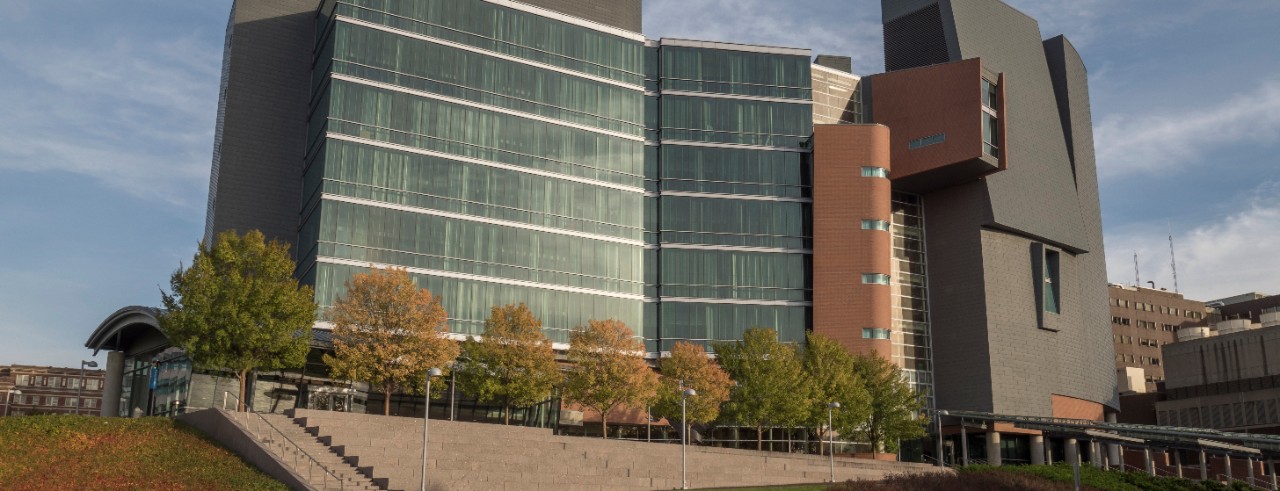
Featured image at top: University of Cincinnati College of Medicine. Photo/Colleen Kelley/UC Creative Services.
Related Stories
‘Designer drug’ shows early neuroprotective signal in acute ischemic stroke
October 28, 2025

Medscape highlighted new trial results led by the University of Cincinnati's Eva Mistry that found an experimental drug shows promise in protecting injured brain cells for patients with acute ischemic stroke.
Is menstrual fluid ‘the most overlooked opportunity’ in women’s health?
October 27, 2025

The Guardian recently reported that period blood has long been thought of as ‘stinky and useless’, but startups are exploring using the fluid to test for a wide range of health conditions — including endometriosis.
What is squalane, and how does it work to moisturize skin?
October 27, 2025

The University of Cincinnati's Kelly Dobos was featured in a Women's Health article discussing squalane, an ingredient being increasingly used in moisturizing skincare products.