Repertoire: UC engineer talks about human factors in medicine
Biomedical engineering professor says ease of use is a big factor in every new product

Repertoire magazine, a trade publication for health care distributors, spoke to a University of Cincinnati biomedical engineer about why it's important to consider how doctors and patients will use medical products when designing them.
UC College of Engineering and Applied Science professor Mary Beth Privitera told Repertoire that each product should consider whom will use it, including the user's language, education or skill level and even relevant cultural norms.

Mary Beth Privitera. Photo/Jay Yocis/UC Creative + Brand
Designers also must consider in what setting the medical product will be used.
"No product development occurs where the goal isn't ease of use," said Privitera, who serves as co-chair for the Association for the Advancement of Medical Instrumentation's Human Engineering Committee. "But sometimes it gets lost."
Privitera said the industry has advanced greatly over the years, in part because of regulations governing product evaluations.
"The fact of the matter is, we've realized we can't develop safe medical devices without considering usability," Privitera told Repertoire. "Ten years ago, we were just recognizing the need to take into account human factors. The conversation has changed: Now, it's about what constitutes good human factors engineering."
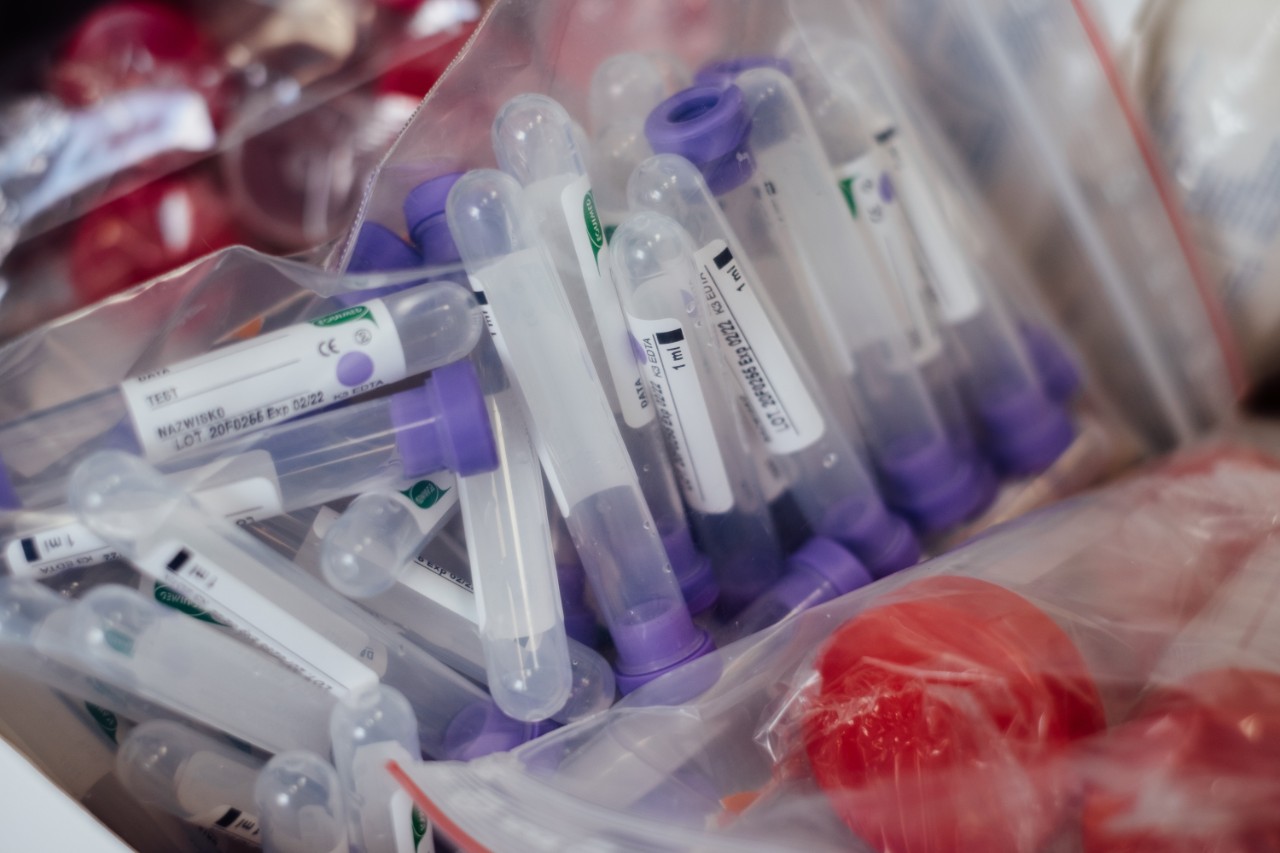
Featured image at top: Blood collection tubes. Photo/Freestocks/Unsplash
Related Stories
‘Designer drug’ shows early neuroprotective signal in acute ischemic stroke
October 28, 2025

Medscape highlighted new trial results led by the University of Cincinnati's Eva Mistry that found an experimental drug shows promise in protecting injured brain cells for patients with acute ischemic stroke.
Is menstrual fluid ‘the most overlooked opportunity’ in women’s health?
October 27, 2025

The Guardian recently reported that period blood has long been thought of as ‘stinky and useless’, but startups are exploring using the fluid to test for a wide range of health conditions — including endometriosis.
What is squalane, and how does it work to moisturize skin?
October 27, 2025

The University of Cincinnati's Kelly Dobos was featured in a Women's Health article discussing squalane, an ingredient being increasingly used in moisturizing skincare products.