Fox19: UC finds invasive species taking over Ohio forests
UC study shows how nonnative invasive plants are taking hold in Ohio

Fox19 talked to a University of Cincinnati biologist about a new botanical survey of southwest Ohio that found an alarming variety of nonnative invasive plants.
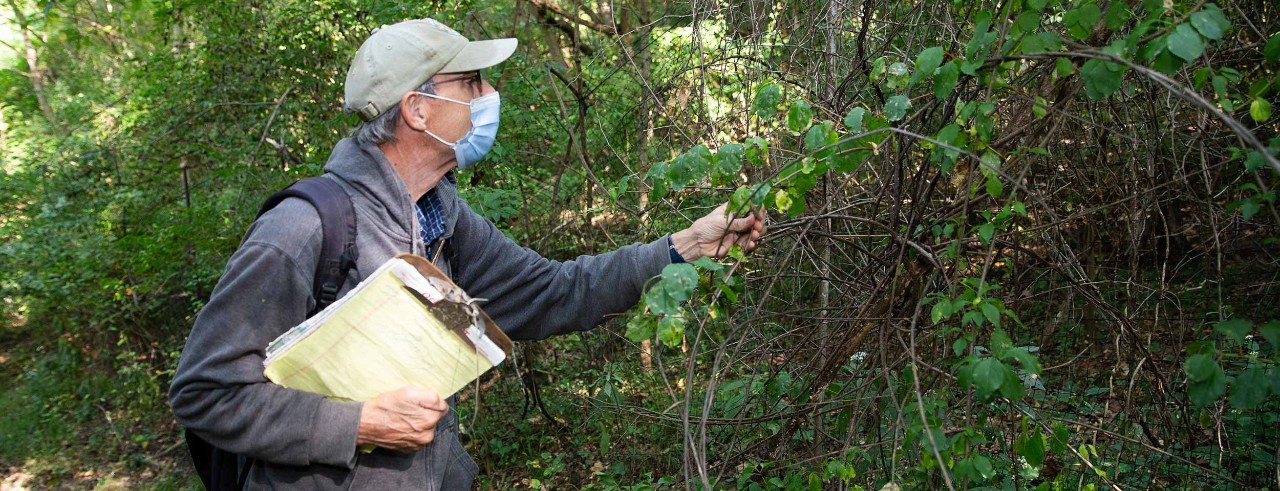
UC College of Arts and Sciences biology professor Denis Conover surveyed parts of Hamilton County where he found nonnative invasive plants such as English ivy, winter creeper, white mulberry and multiflora rose, among many others.

UC ecology professor E. Lucy Braun conducted a botanical survey of southwest Ohio in 1934.
Conover is replicating exhaustive botanical surveys of the area by UC doctoral graduate and professor E. Lucy Braun in 1934 and Cincinnati botanist Thomas G. Lea in 1834. His study, published this month in the journal Ecological Restoration, helps describe how Cincinnati's plant diversity has changed over the last 200 years.
“One of the most striking differences is the large number of non-native invasive plants that have now invaded the natural areas in the Cincinnati area,” Conover told Fox19.
Conover found dozens of species of invasive plants, but some such as Amur honeysuckle and English ivy are particular problems because they are so ubiquitous in forests and can crowd out other native plants.
Conover said people can help by choosing to plant species that are native to the area in their lawns and gardens.
Learn more about nature
UC biology professor Denis Conover leads weekly interpretive nature walks at 2:30 p.m. Sundays at Burnet Woods.

UC biology professor Denis Conover holds porcelainberry during a botanical survey of Spring Grove Cemetery. Photo/Lisa Ventre/UC Marketing + Brand
Related Stories
‘Designer drug’ shows early neuroprotective signal in acute ischemic stroke
October 28, 2025

Medscape highlighted new trial results led by the University of Cincinnati's Eva Mistry that found an experimental drug shows promise in protecting injured brain cells for patients with acute ischemic stroke.
Is menstrual fluid ‘the most overlooked opportunity’ in women’s health?
October 27, 2025

The Guardian recently reported that period blood has long been thought of as ‘stinky and useless’, but startups are exploring using the fluid to test for a wide range of health conditions — including endometriosis.
What is squalane, and how does it work to moisturize skin?
October 27, 2025

The University of Cincinnati's Kelly Dobos was featured in a Women's Health article discussing squalane, an ingredient being increasingly used in moisturizing skincare products.