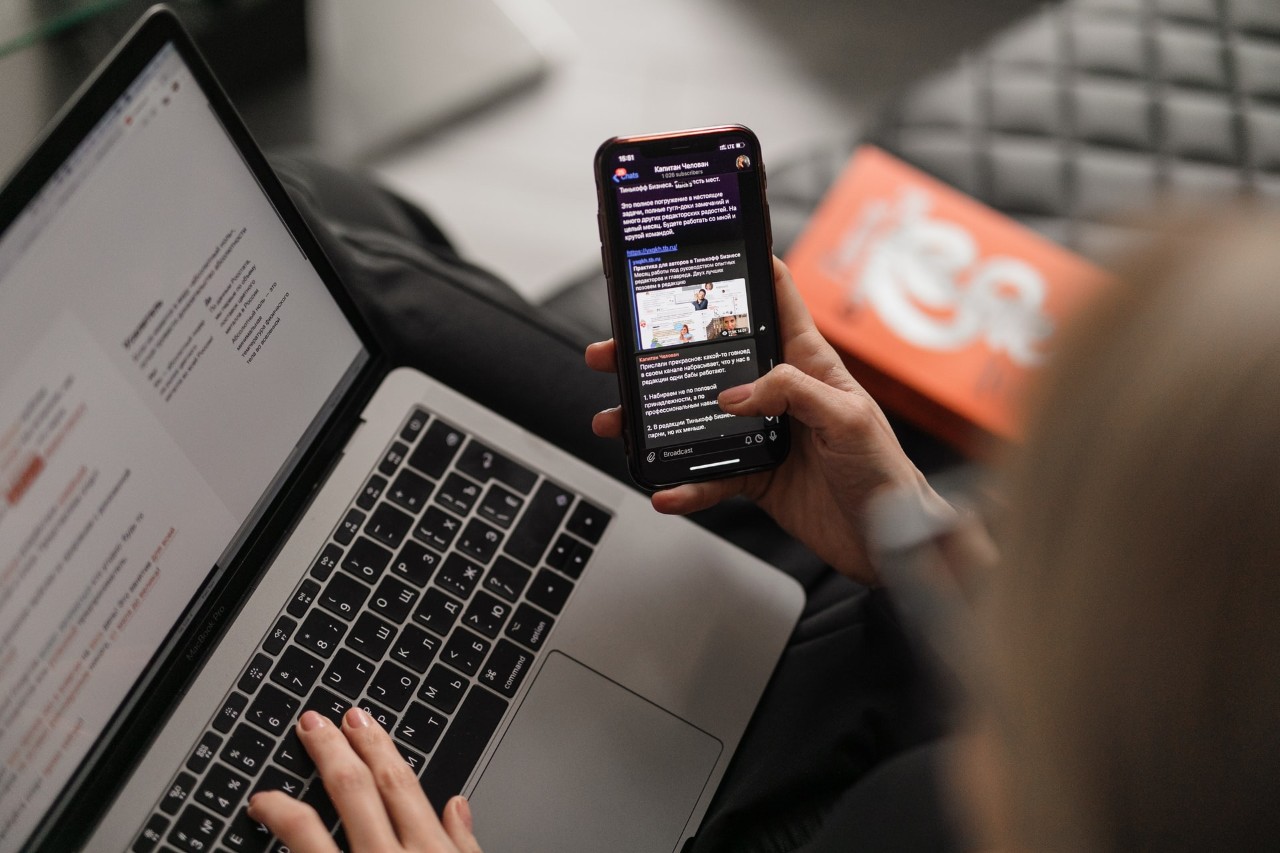
KNOE 8: New research says screen time does not negatively affect children’s intelligence
UC social/behavioral expert Anthony Chemero explains that tech doesn't dumb us down

Despite fears, there is no scientific evidence that shows that smartphones and digital technology harm our biological cognitive abilities,” says Anthony Chemero, a professor of philosophy and psychology, in the UC College of Arts and Sciences, who co-authored a paper stating such in Nature Human Behaviour.
In the paper, Chemero and colleagues at the University of Toronto’s Rotman School of Management expound on the evolution of the digital age, explaining how smart technology supplements thinking, thus helping us to excel.
This opinion paper has been widely cited by media and was cited by KNOE 8 news to support a new study out of Sweden.
Computers, tablets and smart phones, Chemero says, function as an auxiliary, serving as tools which are good at memorization, calculation and storing information and presenting information when you need it.
Chemero was featured in a UC News story and was highlighted by the news syndication corporation Ivanhoe. The syndicated interview was distributed on dozens of news sites.
Featured image courtesy of Unsplash.
Impact Lives Here
The University of Cincinnati is leading public urban universities into a new era of innovation and impact. Our faculty, staff and students are saving lives, changing outcomes and bending the future in our city's direction. Next Lives Here.
Related Stories
‘Designer drug’ shows early neuroprotective signal in acute ischemic stroke
October 28, 2025

Medscape highlighted new trial results led by the University of Cincinnati's Eva Mistry that found an experimental drug shows promise in protecting injured brain cells for patients with acute ischemic stroke.
Is menstrual fluid ‘the most overlooked opportunity’ in women’s health?
October 27, 2025

The Guardian recently reported that period blood has long been thought of as ‘stinky and useless’, but startups are exploring using the fluid to test for a wide range of health conditions — including endometriosis.
What is squalane, and how does it work to moisturize skin?
October 27, 2025

The University of Cincinnati's Kelly Dobos was featured in a Women's Health article discussing squalane, an ingredient being increasingly used in moisturizing skincare products.