
Archaeology: Griffin Warrior was likely a local aristocrat
UC Classics analyzed ancient DNA to learn more about Bronze Age leader in Greece

Archaeology magazine highlighted the discovery by University of Cincinnati researchers that a Bronze Age leader was from the region he one day would come to rule.
UC Classics professor and department head Jack Davis and senior research associate Sharon Stocker contributed to an ambitious project involving experts from around the world who used ancient DNA to study the origins and movements of people across three continents surrounding the Mediterranean Sea.
Led by Harvard University, the research published in three papers in the journal Science examined the ancient remains of more than 700 people who lived before or during the Bronze Age, including the Griffin Warrior, who ruled Pylos, Greece, more than 3.500 years ago.
Davis and Stocker in 2015 discovered the tomb of a Bronze Age leader they named the Griffin Warrior for the mythological griffin emblazoned on an ivory plaque. The tomb contained weapons, armor and jewelry, including a sealstone depicting mortal combat that was heralded as a Bronze Age masterpiece.
Ancient DNA supported what UC’s experts have suspected all along: the Griffin Warrior was from the region he would later rule. Davis said the new evidence refutes the suggestion that he was an invader or outsider.
“We’ve always been skeptical about that theory but weren’t able to prove it except through DNA analysis,” Davis said.
More UC Classics in the news
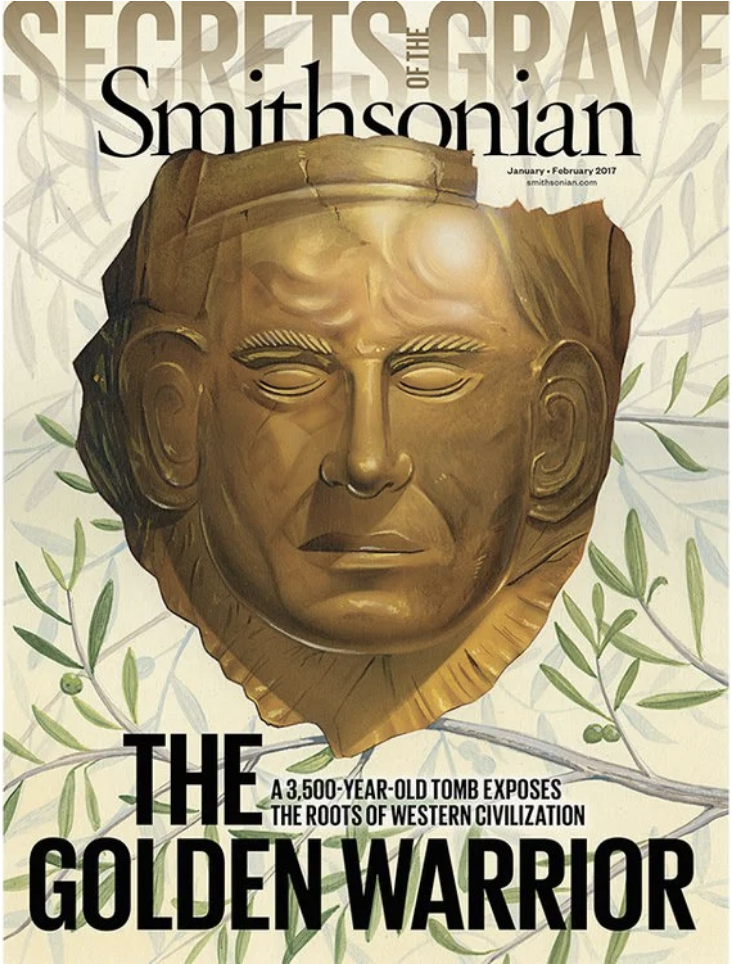
UC Classics' discoveries in Greece have graced the covers of news magazines such as Smithsonian.
- Science Daily: DNA analysis shows Griffin Warrior ruled his Greek homeland
- National Geographic: This 3,500-year-old tomb held the treasures of Greece's Griffin Warrior
- Greek Reporter: The Griffin Warrior, a staggering discovery from ancient Greece
- Cincinnati Enquirer: In Italy, UC students uncover ancient city

UC Classics department head Jack Davis and senior research associate Sharon Stocker, pictured here in front of the Colosseum, are helping to shape our understanding of ancient Greece. Photo/Provided
Related Stories
‘Designer drug’ shows early neuroprotective signal in acute ischemic stroke
October 28, 2025

Medscape highlighted new trial results led by the University of Cincinnati's Eva Mistry that found an experimental drug shows promise in protecting injured brain cells for patients with acute ischemic stroke.
Is menstrual fluid ‘the most overlooked opportunity’ in women’s health?
October 27, 2025

The Guardian recently reported that period blood has long been thought of as ‘stinky and useless’, but startups are exploring using the fluid to test for a wide range of health conditions — including endometriosis.
What is squalane, and how does it work to moisturize skin?
October 27, 2025

The University of Cincinnati's Kelly Dobos was featured in a Women's Health article discussing squalane, an ingredient being increasingly used in moisturizing skincare products.