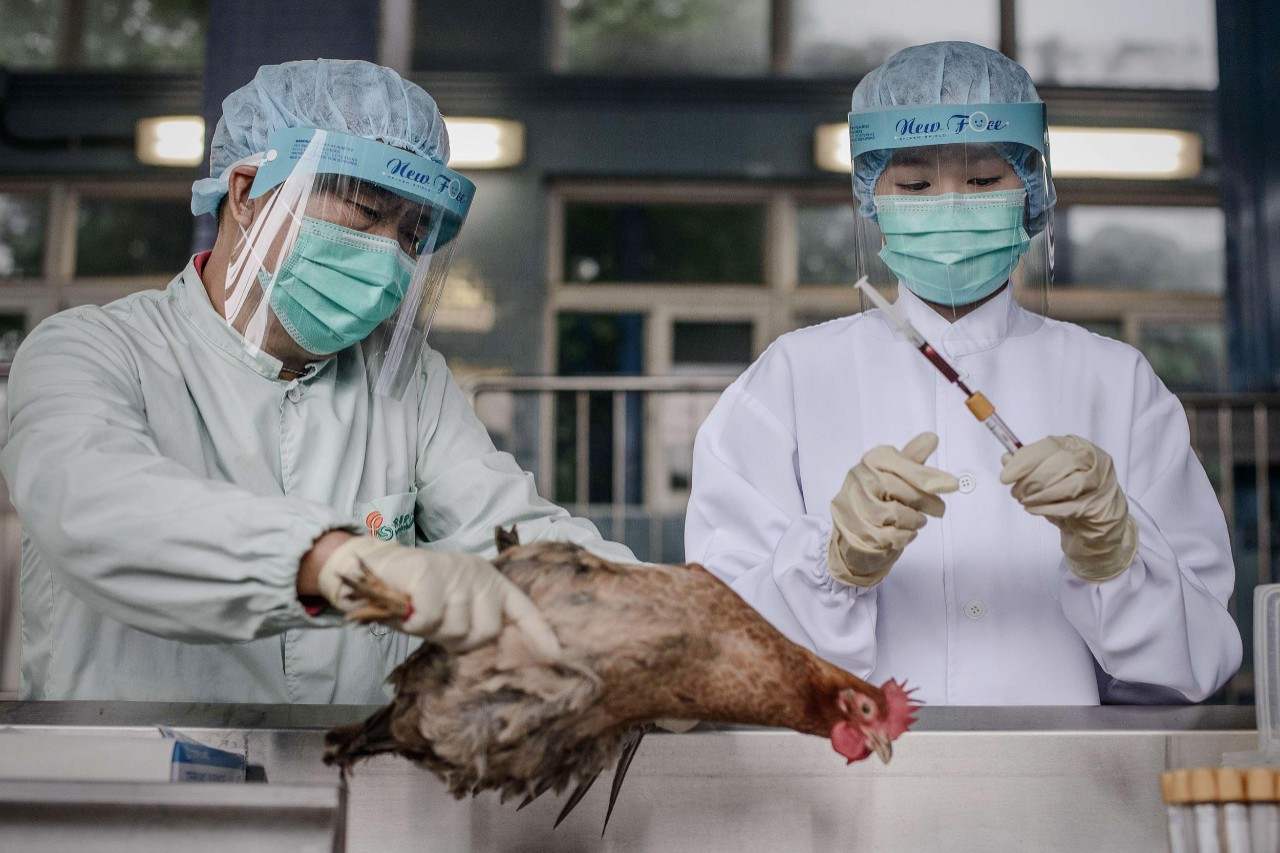
Healthline: Bird flu has arrived in the U.S. earlier than expected
UC expert says outbreaks in humans are rare but have happened

Cases of bird flu are spreading in the U.S. earlier than expected this year. A version of the avian flu was detected in a commercial flock of turkeys in August. Healthline reported the flock was “immediately quarantined” and euthanized to prevent disease transmission and poultry from the infected flock did not enter the food system.
The Minnesota Board of Animal Health (MBAH) emphasized that biosecurity is paramount to stopping the spread of HPAI.
“Flock owners large and small, from commercial operations to backyard flocks, should review their biosecurity measures to maintain the health of their birds,” the MBAH said in a statement.

Carl Fichtenbaum, MD, of the Division of Infectious Diseases at the UC College of Medicine/Photo/Joe Fuqua II/UC Marketing + Brand
Healthline interviewed several experts for the bird flu story, including Carl Fichtenbaum, MD, of the Division of Infectious Diseases in the Department of Internal Medicine in the UC College of Medicine.
Fichtenbaum told Healthline that Bird flu or Avian Influenza is a variant known as the H5N1 Influenza strain.
“It has resulted in rare outbreaks in humans, most notably in the late 1990s in China,” he said. “One outbreak affected more than 800 persons with a case fatality rate of 50 percent.”
“One person in Colorado in late August 2022 was detected with an H5N1 strain or bird flu, though it was different than the strain in China from years ago,” he added.
Lead photo/NBC News
Next Lives Here
The University of Cincinnati is classified as a Research 1 institution by the Carnegie Commission and is ranked in the National Science Foundation's Top-35 public research universities. UC's graduate students and faculty investigate problems and innovate solutions with real-world impact. Next Lives Here.
Related Stories
‘Designer drug’ shows early neuroprotective signal in acute ischemic stroke
October 28, 2025

Medscape highlighted new trial results led by the University of Cincinnati's Eva Mistry that found an experimental drug shows promise in protecting injured brain cells for patients with acute ischemic stroke.
Is menstrual fluid ‘the most overlooked opportunity’ in women’s health?
October 27, 2025

The Guardian recently reported that period blood has long been thought of as ‘stinky and useless’, but startups are exploring using the fluid to test for a wide range of health conditions — including endometriosis.
What is squalane, and how does it work to moisturize skin?
October 27, 2025

The University of Cincinnati's Kelly Dobos was featured in a Women's Health article discussing squalane, an ingredient being increasingly used in moisturizing skincare products.