Discover: Ancient DNA suggests Griffin Warrior ruled his homeland
UC Classics' discoveries continue to shed light on ancient Greece

Discover magazine featured a DNA analysis by the University of Cincinnati and its international partners that found that a Bronze Age warrior was born in the area he one day would come to rule.
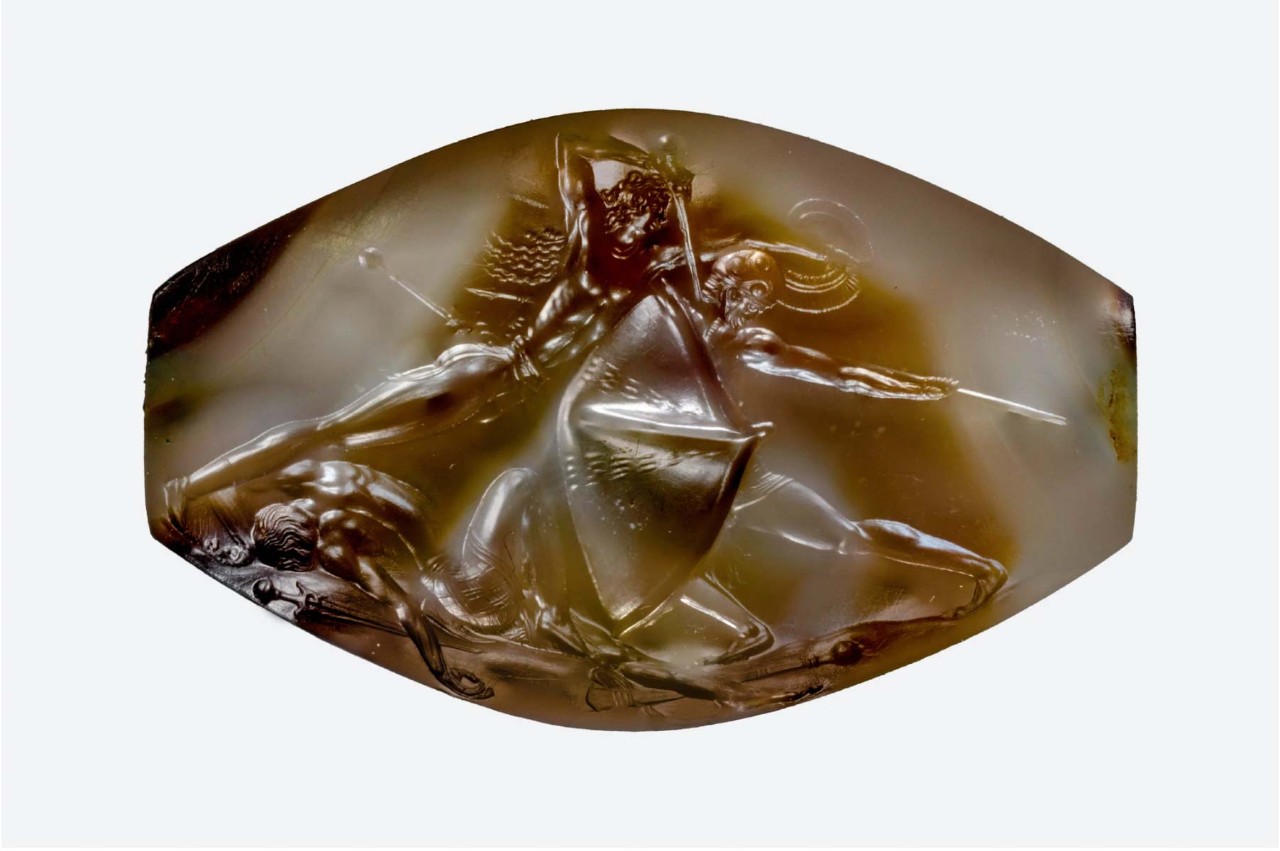
UC Classics professor Jack Davis and UC senior research associate Sharon Stocker in 2015 discovered the tomb of the Griffin Warrior near the Palace of Nestor in coastal Pylos, Greece. They named the warrior for the half-lion, half-eagle mythological figure emblazoned on his ivory plaque.

Discoveries by UC Classics Department Head Jack Davis and UC Senior Research Associate Sharon Stocker are changing the way we understand ancient Greece. Photo/UC Classics
UC researchers collaborated with archaeologists from around the world on an ambitious project to examine the ancient DNA from the remains of 727 people to study the origins and movements of people during the Bronze Age.
They found that between 5,000 and 7,000 years ago, people with ancestry from the Caucasus, a region between the Black and Caspian seas, moved west into Anatolia (now Turkey) and north into the steppe of Eastern Europe. Then around 5,000 years ago, people from Eastern Europe spread out across the European continent and into Western Asia and back to the Caucasus. They joined local populations, “creating a tapestry of diverse ancestry from which speakers of the Greek, Paleo-Balkan and Albanian languages arose.”
Three studies on the project were published this year in the journal Science.
“When we look at the rise of Mycenaean civilization, the ancient DNA supports the notion that it was a local phenomenon, not something imported from the outside,” said Davis, a study co-author and head of UC's Classics Department.
“The development of the state by the Mycenaean was indigenous to Greece,” Davis said.
Davis and Stocker hope to turn to ancient DNA again to examine any relationships between the Griffin Warrior and the people buried in gold-lined princely tombs they found nearby in 2017.
“What will be interesting to see is if we can establish a genetic relationship between the Griffin Warrior and the people buried in those tholos tombs at the same time,” Davis told Discover.
Related Stories
‘Designer drug’ shows early neuroprotective signal in acute ischemic stroke
October 28, 2025

Medscape highlighted new trial results led by the University of Cincinnati's Eva Mistry that found an experimental drug shows promise in protecting injured brain cells for patients with acute ischemic stroke.
Is menstrual fluid ‘the most overlooked opportunity’ in women’s health?
October 27, 2025

The Guardian recently reported that period blood has long been thought of as ‘stinky and useless’, but startups are exploring using the fluid to test for a wide range of health conditions — including endometriosis.
What is squalane, and how does it work to moisturize skin?
October 27, 2025

The University of Cincinnati's Kelly Dobos was featured in a Women's Health article discussing squalane, an ingredient being increasingly used in moisturizing skincare products.