Yahoo News: Experts explain the wild reason we get goosebumps
UC expert says they are tied to an evolutionary fight-or-flight response

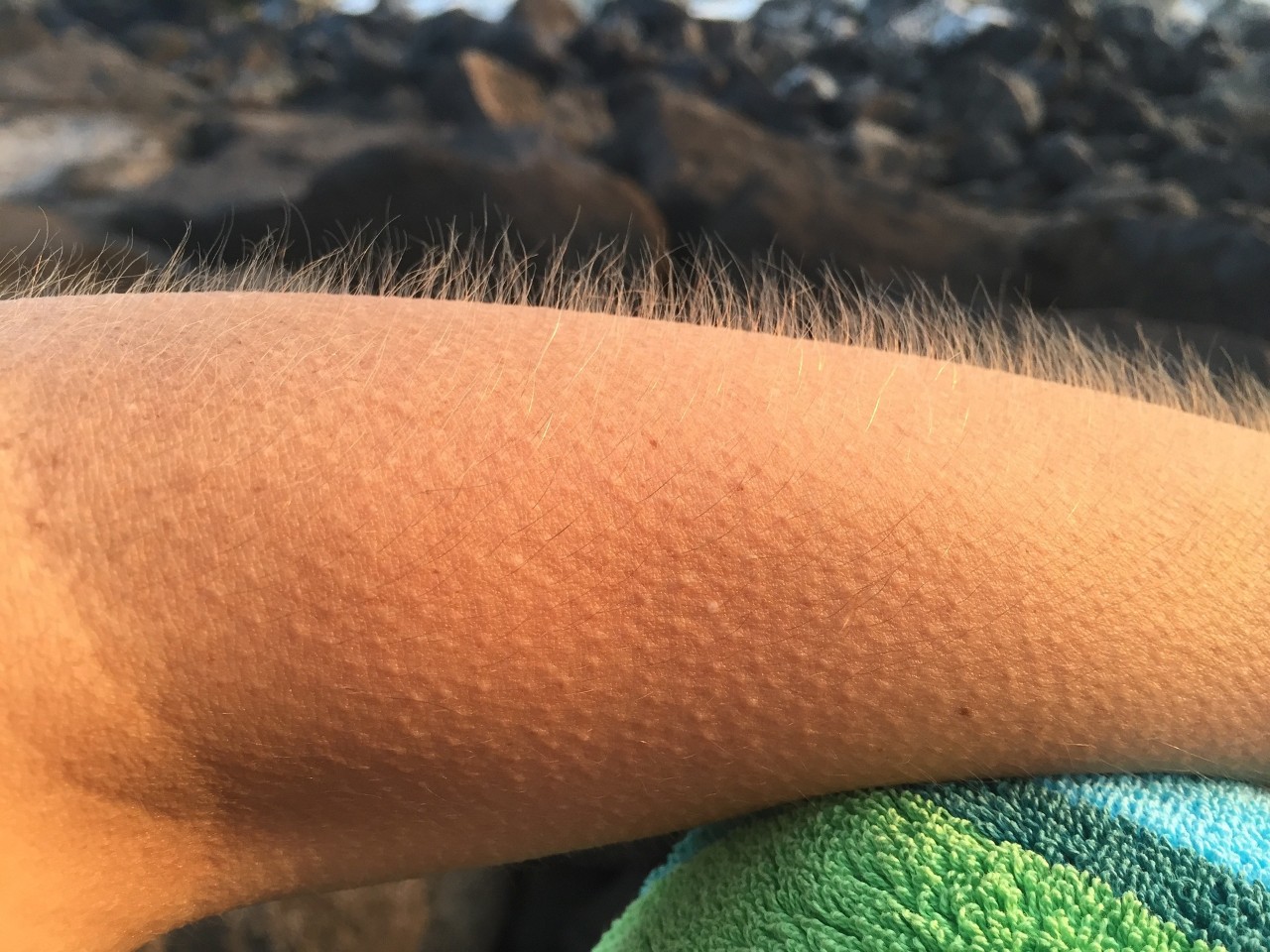
With colder weather settling in for the next few months, winter chills will be more common, with many of us experiencing goosebumps. They may also occur while watching a scary movie. While they are triggered by two different experiences, anatomically, they’re the same.
In a story produced by Prevention and posted by Yahoo News, Diya Mutasim, MD, of the Department of Dermatology at the UC College of Medicine was one of the experts cited to explain the phenomenon of goosebumps.

Diya Mutasim, MD, of the Department of Dermatology at the UC College of Medicine/Photo/Provided
Prevention reported that goosebumps are called “cutis anserine” or “piloerection.” The former literally means skin (cutis) goose (anser), and riffs off of the appearance of raw poultry skin after its feathers are plucked.
The latter title stems from the arrector pili muscles, the smooth muscles responsible for the physical response. They contract, pulling body hair that typically lays an at angle to stand upright, which creates a visible bump at the site of a hair follicle, says Mutasim. “When this happens, it involves all hair follicles in an area of the body, hence goosebumps,” he adds.
In short, goosebumps are triggered by various stimuli, including cold temperatures and emotions like fear, surprise, or other intense feelings, says Mutasim. And as a function of the sympathetic nervous system, they happen involuntarily.
But why are they triggered in the first place? That’s where things get interesting. Goosebumps are believed to be an evolutionary fight-or-flight response “left over from earlier animals,” explains Mutasim. When wild mammals are cold, goosebumps trigger their fur coats to stand taller, inviting additional insulation and warmth. In a study on mice, researchers found that they could also stimulate hair growth to provide warmth long-term. “Humans do not have enough hair for the phenomenon to be beneficial to protect against cold weather, yet the phenomenon persists,” Mutasim adds.
Lead photo/Pixabay
Next Lives Here
The University of Cincinnati is classified as a Research 1 institution by the Carnegie Commission and is ranked in the National Science Foundation's Top-35 public research universities. UC's graduate students and faculty investigate problems and innovate solutions with real-world impact. Next Lives Here.
Related Stories
‘Designer drug’ shows early neuroprotective signal in acute ischemic stroke
October 28, 2025

Medscape highlighted new trial results led by the University of Cincinnati's Eva Mistry that found an experimental drug shows promise in protecting injured brain cells for patients with acute ischemic stroke.
Is menstrual fluid ‘the most overlooked opportunity’ in women’s health?
October 27, 2025

The Guardian recently reported that period blood has long been thought of as ‘stinky and useless’, but startups are exploring using the fluid to test for a wide range of health conditions — including endometriosis.
What is squalane, and how does it work to moisturize skin?
October 27, 2025

The University of Cincinnati's Kelly Dobos was featured in a Women's Health article discussing squalane, an ingredient being increasingly used in moisturizing skincare products.