WLWT: Why Bradford pear is now banned in Ohio
UC biologist Theresa Culley explains how Callery pear trees are growing wild across Midwest

WLWT-Channel 5 turned to University of Cincinnati biology professor Theresa Culley to explain how Ohio banned the sale of an invasive tree this month to protect native forests.

Ohio is the first state to ban the sale of Callery pear trees. Photo/Troy Jarrell/Unsplash
Ohio was the first state in the country in 2023 to ban the sale of Callery pear trees, an ornamental that sprouts white flowers in the spring. The trees, which include Bradford pears, for years were a popular choice for landscapers and nurseries.
The pear trees started growing wild in forests and open spaces across the Midwest. But when a sterile variety was crossed with other varieties to make them more hardy, they began taking over forests from Michigan to Georgia.
The trees in 2018 were placed on Ohio's invasive species list, starting the clock for landscapers, growers and nurseries to replace their inventories. South Carolina and Pennsylvania have also passed bans that will take effect soon.
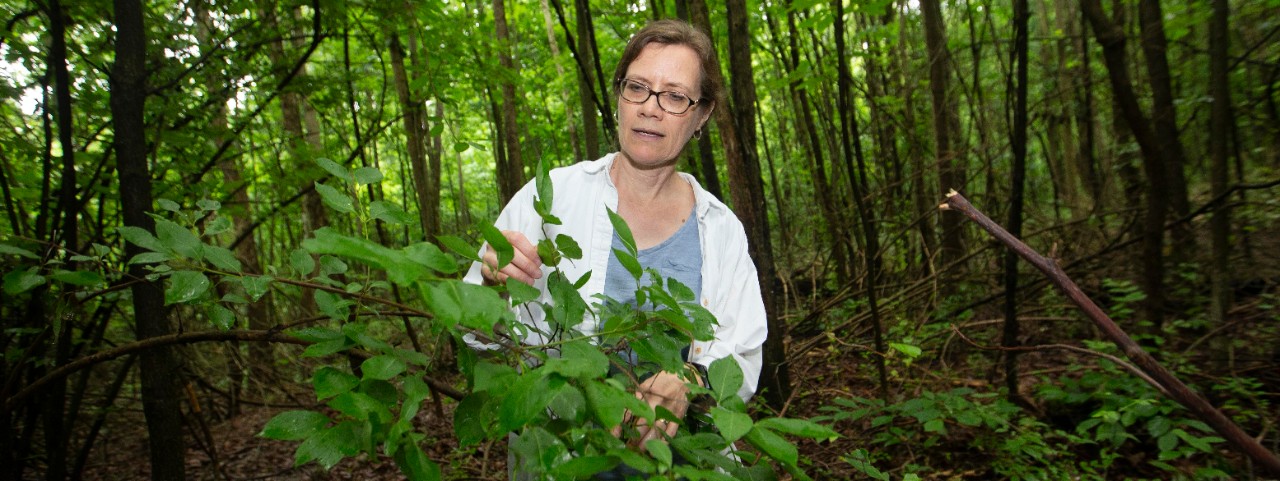
Featured image at top: UC biology professor Theresa Culley stands in a grove of wild-growing Callery pear trees in Cincinnati's Harris Benedict Nature Preserve. Photo/Joseph Fuqua II/UC
More UC Biology in the News

UC biology professor Theresa Culley serves on the Ohio Invasive Plants Council. Photo/Joseph Fuqua II/UC
- The Columbus Dispatch: Ohio's ban on Callery pear trees now in effect
- WDTN-2News: Ohio officially prohibits Callery pear tree
- Landscape Business: Ohio outlaws ubiquitous pear trees
Related Stories
‘Designer drug’ shows early neuroprotective signal in acute ischemic stroke
October 28, 2025

Medscape highlighted new trial results led by the University of Cincinnati's Eva Mistry that found an experimental drug shows promise in protecting injured brain cells for patients with acute ischemic stroke.
Is menstrual fluid ‘the most overlooked opportunity’ in women’s health?
October 27, 2025

The Guardian recently reported that period blood has long been thought of as ‘stinky and useless’, but startups are exploring using the fluid to test for a wide range of health conditions — including endometriosis.
What is squalane, and how does it work to moisturize skin?
October 27, 2025

The University of Cincinnati's Kelly Dobos was featured in a Women's Health article discussing squalane, an ingredient being increasingly used in moisturizing skincare products.