Cabin Radio: Ancient antlers show caribou calving grounds persist over millennia
UC study finds caribou have been using same Arctic areas to raise babies for 3,000 years

Cabin Radio in Canada's Northwest Territories highlighted a study by the University of Cincinnati that found caribou have been using the same Arctic calving grounds for at least 3,000 years.
UC College of Arts and Sciences paleoecologist Joshua Miller was lead author of a study published in the journal Frontiers in Ecology and Evolution that examined antlers shed by female caribou in the Arctic National Wildlife Refuge.

UC Assistant Professor of Geology Joshua Miller found that shed caribou antlers in the Arctic leave a record of historic calving grounds dating back thousands of years. Photo/Colleen Kelley/UC Marketing + Brand
Miller has been leading summer expeditions to the Arctic National Wildlife Refuge since 2010, using rafts to navigate remote rivers to search for caribou antlers exposed on the tundra.
Female caribou shed their antlers within days of giving birth, leaving behind a record of their annual travels across Alaska and Canada’s Ivvavik National Park that persists on the cold tundra for hundreds or even thousands of years. Miller and his collaborators with the University of Alaska and the U.S. Fish and Wildlife Service recovered antlers that have sat undisturbed on the arctic tundra since the Bronze Age.
The study demonstrates how important the area is for an animal that native Alaskans and Canadians still depend on for sustenance, even as energy companies seek to exploit oil and gas resources in this protected area.
Female caribou shed their antlers within days of giving birth, leaving behind a record of their annual travels across Alaska and Canada’s Yukon that persists on the cold tundra for hundreds or even thousands of years. Researchers recovered antlers that have sat undisturbed on the arctic tundra since the Bronze Age.
“It still blows my mind that you can just walk across tundra and there are these ancient echoes of this past population,” Miller told Cabin Radio.
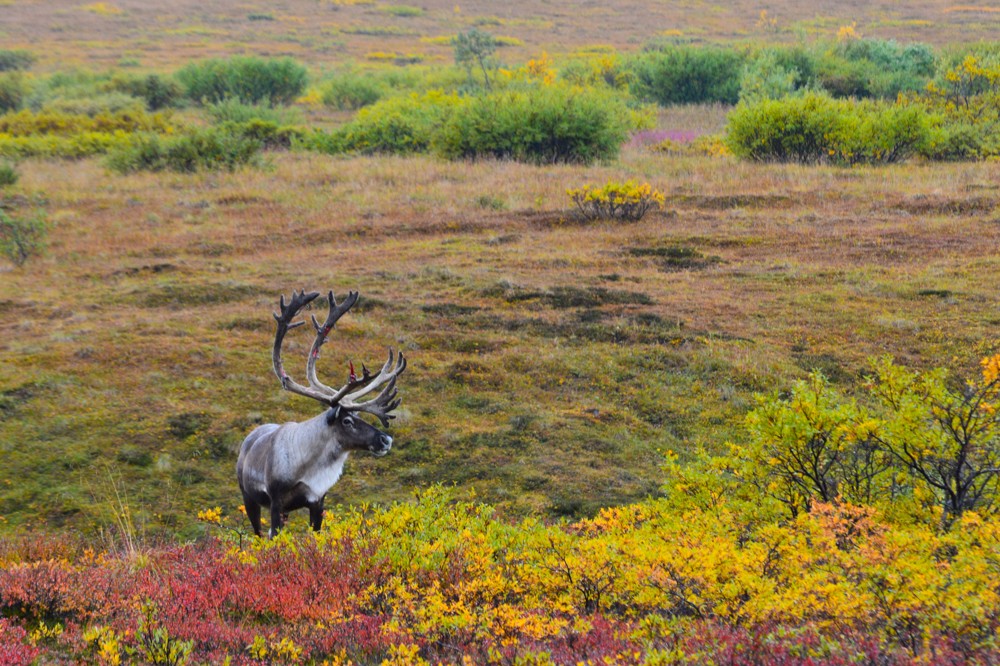
Featured image at top: UC assistant professor Joshua Miller uses shed antlers to track the annual migration of caribou. Photo/Lucian Provines
More UC geology in the news

UC College of Arts and Sciences Assistant Professor Joshua Miller. Photo/Colleen Kelley/UC Marketing + Brand
- Billings Gazette: Old antlers help date caribou calving grounds to 3,000 years old
- Knoxville Daily Sun: Caribou have been using same Arctic calving grounds for 3,000 years
- Science Daily: Caribou have been using same calving grounds for 3,000 years
Related Stories
‘Designer drug’ shows early neuroprotective signal in acute ischemic stroke
October 28, 2025

Medscape highlighted new trial results led by the University of Cincinnati's Eva Mistry that found an experimental drug shows promise in protecting injured brain cells for patients with acute ischemic stroke.
Is menstrual fluid ‘the most overlooked opportunity’ in women’s health?
October 27, 2025

The Guardian recently reported that period blood has long been thought of as ‘stinky and useless’, but startups are exploring using the fluid to test for a wide range of health conditions — including endometriosis.
What is squalane, and how does it work to moisturize skin?
October 27, 2025

The University of Cincinnati's Kelly Dobos was featured in a Women's Health article discussing squalane, an ingredient being increasingly used in moisturizing skincare products.