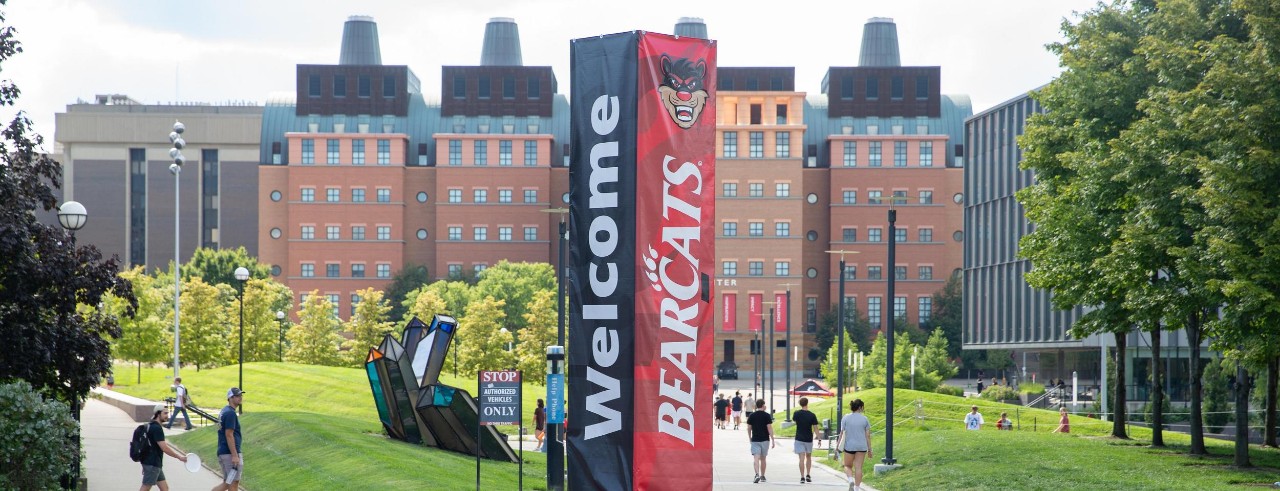
Spectrum News: UC helps students overcome challenges after COVID crisis
UC’s Jack Miner discusses changes spurred on by the pandemic

The landscape in education nationwide continues to change nearly three years after the start of the COVID-19 pandemic. About a million fewer students are enrolling in higher education compared to before the pandemic started.
“That is staggering not just for those 18-, 19-, 20-year-olds. That’s going to be staggering for generations to come because it’s so hard to go back to college,” said Jack Miner, vice provost for enrollment management, during a recent Spectrum News interview.
UC has been able buck the trend with a proactive approach to course design, tutoring and mental health care options, Miner told Spectrum.
“One of the other things we see, though, is a different level of preparedness coming from high school to college,” Miner said.
Professors have had to re-design some courses and they’ve added a lot more tutors.
“We’ve really integrated that into our courses in a way that other schools haven't,” Miner said. “So the stigma of reaching out for help is very different than it is someplace else and it’s really removed here.”
UC’s enrollment topped 47,914 students for the fall semester. The figure represented nearly a 2.6% increase over last year’s enrollment or an additional 1,204 students. The university has recorded nearly a decade of continuous growth.
Third-year chemistry major Reese Haskins also told Spectrum News that UC has helped to remove another stigma, too: asking for help when it comes to mental health, especially after COVID.
View the Spectrum News interview online.
Related Stories
‘Designer drug’ shows early neuroprotective signal in acute ischemic stroke
October 28, 2025

Medscape highlighted new trial results led by the University of Cincinnati's Eva Mistry that found an experimental drug shows promise in protecting injured brain cells for patients with acute ischemic stroke.
Is menstrual fluid ‘the most overlooked opportunity’ in women’s health?
October 27, 2025

The Guardian recently reported that period blood has long been thought of as ‘stinky and useless’, but startups are exploring using the fluid to test for a wide range of health conditions — including endometriosis.
What is squalane, and how does it work to moisturize skin?
October 27, 2025

The University of Cincinnati's Kelly Dobos was featured in a Women's Health article discussing squalane, an ingredient being increasingly used in moisturizing skincare products.