BBC: 'Snowball Earth' could have been a slushball
UC geologist says mid-latitude seas might have remained ice-free

BBC News highlighted research by a University of Cincinnati geologist who examined an ice age 635 million years ago that many scientists believed froze the planet solid from pole to pole.
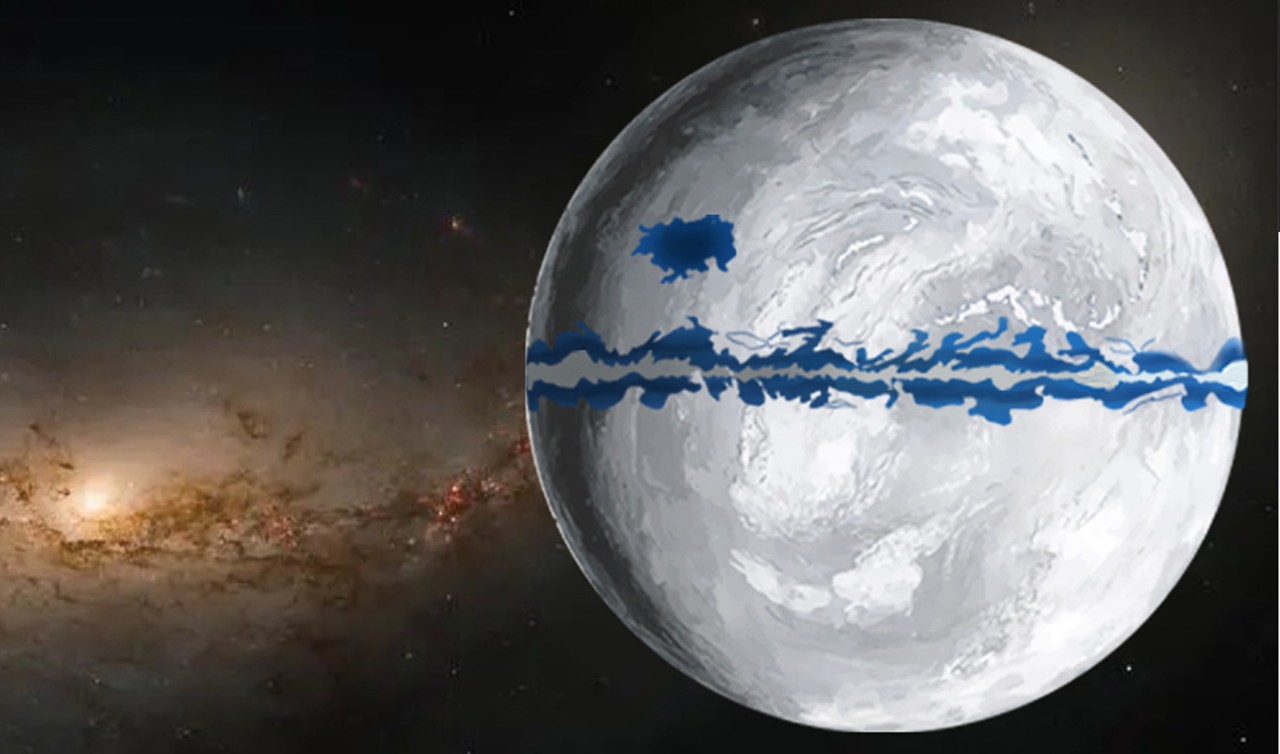
But a new study published in the journal Nature Communications by an international team of scientists said evidence suggests some shallow seas in the mid-latitudes remained ice free, possibly allowing life to persist during this prolonged period of global glaciation.
UC College of Arts and Sciences geosciences Professor Thomas Algeo worked with researchers from the China University of Geosciences to use isotopic analysis to understand what life on Earth was like hundreds of millions of years before dinosaurs roamed the Earth.
“We called this ice age ‘Snowball Earth,'” Algeo said. “We used to believe that Earth was completely frozen during this long ice age. But it could be ‘Slushball Earth.’”
Featured illustration at top: University of Cincinnati researchers found evidence that a prolonged ice age 635 million years did not freeze the planet solid from pole to pole as previously believed. Graphic/Huyue Song

UC College of Arts and Sciences Professor Thomas Algeo studied life on Earth during a prolonged ice age 635 million years ago. Photo/Andrew Higley/UC Marketing + Brand
More UC Geosciences in the news
- Extreme Tech: 'Snowball Earth' may have been less icy than thought
- India Today: When Earth froze to death but somehow life survived
Related Stories
‘Designer drug’ shows early neuroprotective signal in acute ischemic stroke
October 28, 2025

Medscape highlighted new trial results led by the University of Cincinnati's Eva Mistry that found an experimental drug shows promise in protecting injured brain cells for patients with acute ischemic stroke.
Is menstrual fluid ‘the most overlooked opportunity’ in women’s health?
October 27, 2025

The Guardian recently reported that period blood has long been thought of as ‘stinky and useless’, but startups are exploring using the fluid to test for a wide range of health conditions — including endometriosis.
What is squalane, and how does it work to moisturize skin?
October 27, 2025

The University of Cincinnati's Kelly Dobos was featured in a Women's Health article discussing squalane, an ingredient being increasingly used in moisturizing skincare products.