WVXU: Genetics play a role in opioid addiction. A UC doctor is drilling down on the specifics
Research could lead to the creation of a test for opioid use disorder

Since 2014, Ohio is in the top five nationwide in opioid deaths. Recently published research from the University of Cincinnati examines the role of genetics in opioid use disorder. WVXU produced a story on the research, interviewing lead researcher, Caroline Freiermuth, MD, of the Department of Emergency Medicine at the UC College of Medicine. She and her team screened over 1,300 patients at three Ohio urban emergency rooms and found 20% had opioid use disorder.
The patients studied were at the ER for a variety of reasons. Some were already addicted to opioids, some had never taken them, and others were using them to manage acute pain. All of them were asked to be part of the study.
WVXU reported the 20% of people who had opioid use disorder is higher than what was previously thought — 2% in the general population and 7-15% in emergency room settings.
"This is still a hidden disease," Freiermuth says. "People are afraid to talk about it and we really do need to do a better job of screening so that we can identify the people who have already developed this disorder and really get them into the treatment they need."
For genetics, she looked at the dopamine reward pathway and the metabolism of opioids for the study.
Using artificial intelligence, her team is analyzing the entire data set, including things like the environment, mental health disorders, and past experiences to see what role they play.
"The biggest takeaway is this adds to the body of research that says there is really a genetic component," Freiermuth says. "We're starting to hone down what the genetic component is and we could get to a point in the future when we could run tests and if you have opioid use disorder, we could run the test on you and we could run it on your children so that we could counsel people in the future that they may also be at risk."
Read more about the research here.
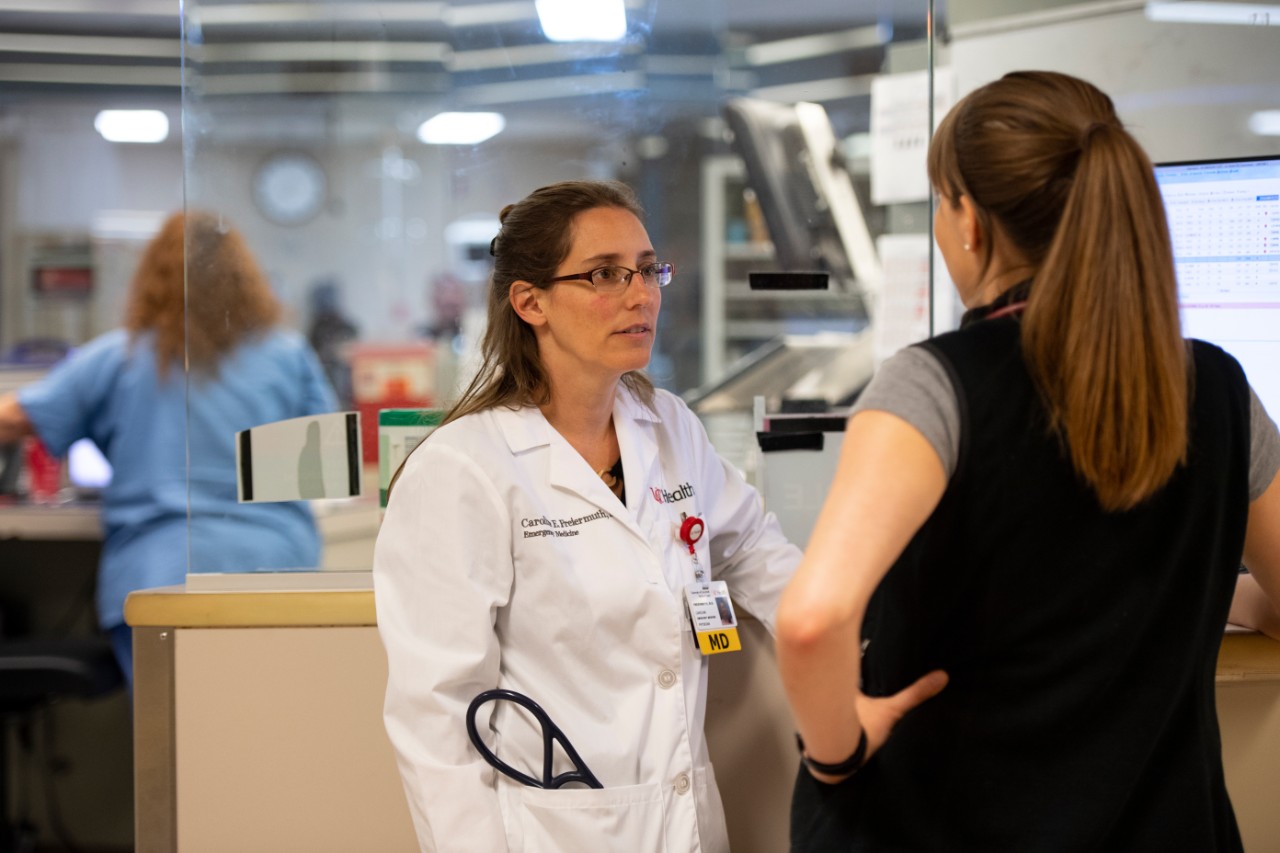
Lead photo of Caroline Freiermuth, MD/Colleen Kelley/UC Marketing + Brand
Next Lives Here
The University of Cincinnati is classified as a Research 1 institution by the Carnegie Commission and is ranked in the National Science Foundation's Top-35 public research universities. UC's graduate students and faculty investigate problems and innovate solutions with real-world impact. Next Lives Here.
Related Stories
‘Designer drug’ shows early neuroprotective signal in acute ischemic stroke
October 28, 2025

Medscape highlighted new trial results led by the University of Cincinnati's Eva Mistry that found an experimental drug shows promise in protecting injured brain cells for patients with acute ischemic stroke.
Is menstrual fluid ‘the most overlooked opportunity’ in women’s health?
October 27, 2025

The Guardian recently reported that period blood has long been thought of as ‘stinky and useless’, but startups are exploring using the fluid to test for a wide range of health conditions — including endometriosis.
What is squalane, and how does it work to moisturize skin?
October 27, 2025

The University of Cincinnati's Kelly Dobos was featured in a Women's Health article discussing squalane, an ingredient being increasingly used in moisturizing skincare products.