Atlas Obscura: Biologists threw a fluorescent frog rave for science
UC biologist explains why some frogs glow in the dark

Atlas Obscura turned to a University of Cincinnati doctoral student to explain why many frogs glow in the dark under certain light.
Amartya Tashi Mitra is studying the development of vision in UC Professor Elke Buschbeck's lab. Mitra said the evidence suggests biofluorescence is one way frogs communicate in a world in which they are most active at night.

UC doctoral student Amartya Mitra. Photo/Provided
Florida State University researcher Courtney Whitcher shared her discovery that many frogs are biofluorescent with Atlas Obscura. Whitcher has been studying the phenomenon in the rainforests of South America.
Mitra was not part of the study, which was published as a preprint in the journal bioRxiv.
“It also seems that the species that they found to fluoresce seem to be things like tree frogs with really big eyes,” Mitra told Atlas Obscura.
“It’s quite likely that those species are using their vision to perform complex tasks like signaling. They didn’t find this kind of fluorescence in aquatic species, which have much smaller eyes and live in murky waters, so it does seem that this is something that evolved by a sensory drive to serve a very specific purpose.”
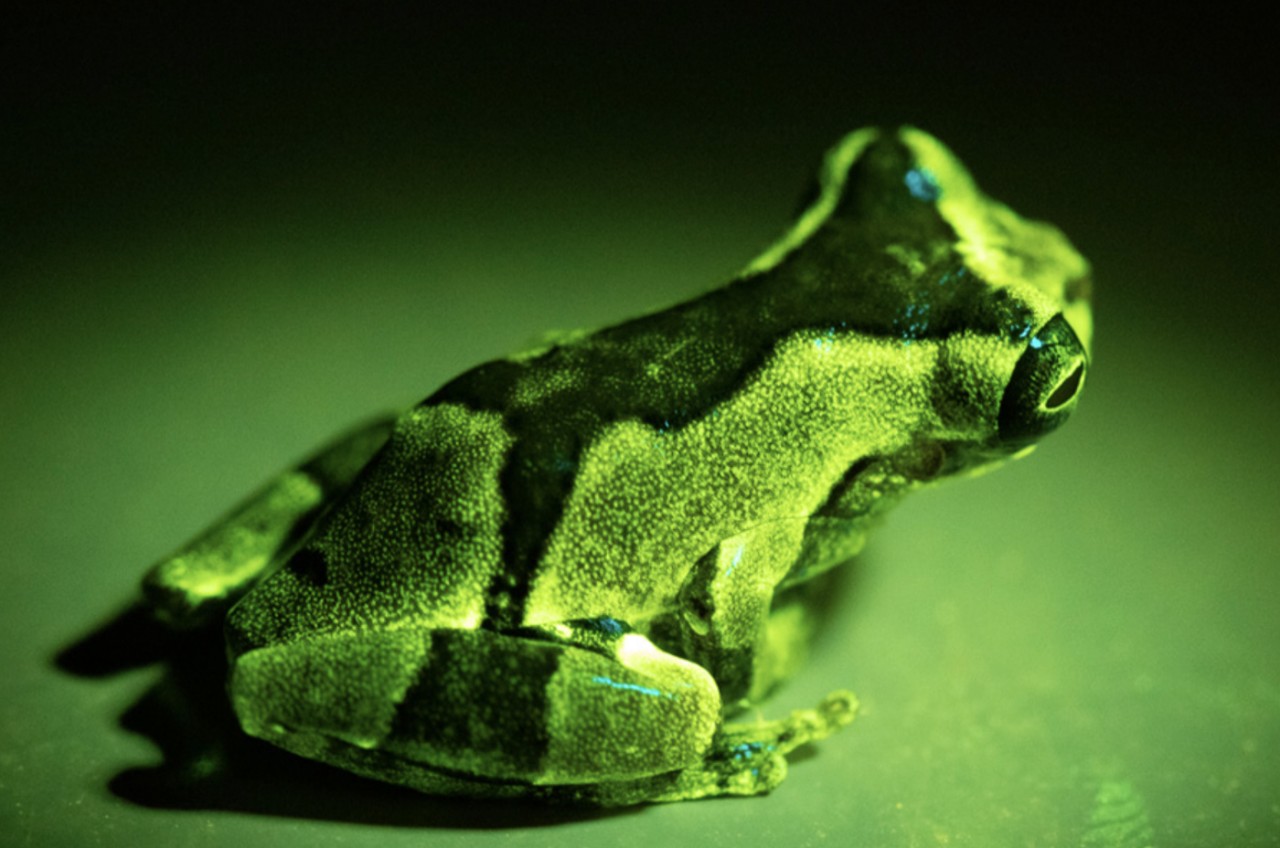
Featured image at top: A frog glows under a black light. Photo/Santiago Ron
Related Stories
‘Designer drug’ shows early neuroprotective signal in acute ischemic stroke
October 28, 2025

Medscape highlighted new trial results led by the University of Cincinnati's Eva Mistry that found an experimental drug shows promise in protecting injured brain cells for patients with acute ischemic stroke.
Is menstrual fluid ‘the most overlooked opportunity’ in women’s health?
October 27, 2025

The Guardian recently reported that period blood has long been thought of as ‘stinky and useless’, but startups are exploring using the fluid to test for a wide range of health conditions — including endometriosis.
What is squalane, and how does it work to moisturize skin?
October 27, 2025

The University of Cincinnati's Kelly Dobos was featured in a Women's Health article discussing squalane, an ingredient being increasingly used in moisturizing skincare products.