Nightline: Exclusivity helps drive the Stanley x Starbucks quencher craze
UC marketing professor says fear of missing out motivates consumers

The limited-edition nature of the Stanley x Starbucks quenchers and a fear of missing out seem to be driving the craze that’s exploding across social media, a University of Cincinnati marketing professor told ABC's “Nightline.”

Joshua Clarkson, PhD, Arthur Beerman Professor of Marketing Department of Marketing
Shoppers have waited for hours in line at Target stores to purchase the 40-ounce tumblers, often documenting their experiences on apps such as TikTok. The cups come in a variety of colors, with pink and red Galentine’s Collection models in particular demand.
“It’s crazy also that we as consumers will pay for that, but the reason we’re paying for it is precisely because it is difficult to get or maybe even impossible to get,” said Joshua Clarkson, PhD, the Arthur Beerman Professor of Marketing in UC’s Carl H. Lindner College of Business. “And nothing against Stanley but certainly the question could be raised, how popular would this be if it had never been limited edition or if were easy for people to get?”
The tumblers have been so popular, “Nightline” reported, that Stanley’s annual sales are projected to increase to $750 million or more in 2023 from a previous mark of $70 million a year.
For people how wait long hours to obtain one of the coveted cups, Clarkson hopes the Stanley quenchers provide a good memory.
“We are seeing consumers go to extreme lengths to obtain these cups,” he said. “And so that Stanley now not only serves as a water container, but it also serves as a reminder of a hopefully special time in people’s lives.”
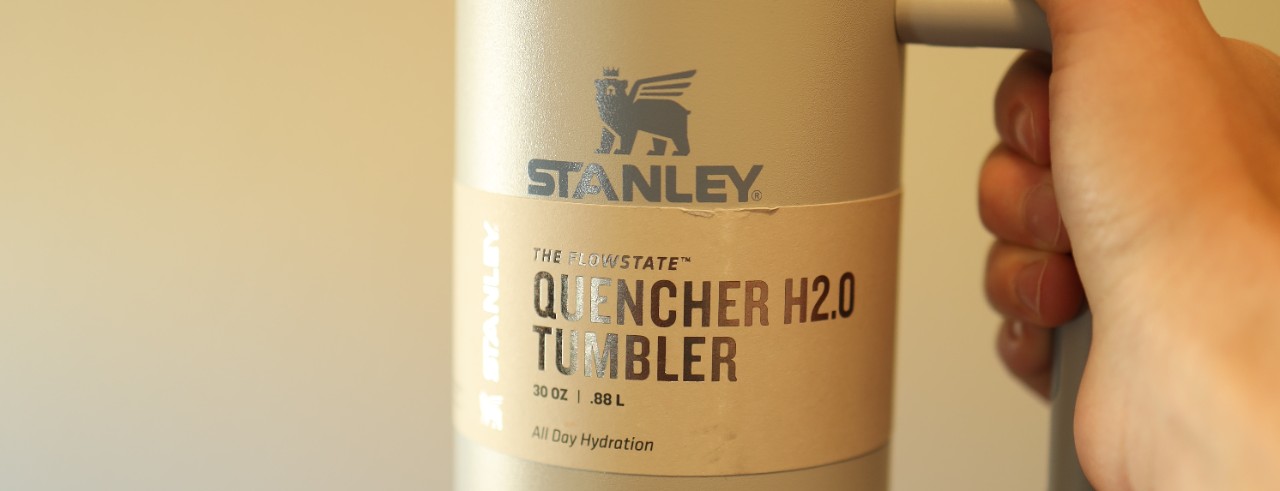
Featured image at top: A hand holding a Stanley tumbler. Photo/Natilyn Photography via Unsplash
Impact Lives Here
The University of Cincinnati is leading public urban universities into a new era of innovation and impact. Our faculty, staff and students are saving lives, changing outcomes and bending the future in our city's direction. Next Lives Here.
Related Stories
‘Designer drug’ shows early neuroprotective signal in acute ischemic stroke
October 28, 2025

Medscape highlighted new trial results led by the University of Cincinnati's Eva Mistry that found an experimental drug shows promise in protecting injured brain cells for patients with acute ischemic stroke.
Is menstrual fluid ‘the most overlooked opportunity’ in women’s health?
October 27, 2025

The Guardian recently reported that period blood has long been thought of as ‘stinky and useless’, but startups are exploring using the fluid to test for a wide range of health conditions — including endometriosis.
What is squalane, and how does it work to moisturize skin?
October 27, 2025

The University of Cincinnati's Kelly Dobos was featured in a Women's Health article discussing squalane, an ingredient being increasingly used in moisturizing skincare products.