UC launches new Ohio water study
Spectrum News highlights examination of groundwater along Great Miami

Spectrum News highlighted a new study of excess nutrients and contaminants in groundwater along the Great Miami River.
University of Cincinnati doctoral student Megan Naber told Spectrum News that the project is helping scientists better understand the role that aquifers play in filtering nutrients such as nitrogen and contaminants such as PFAS from drinking water.

Associate Professor Reza Soltanian is studying contaminants in groundwater along the Great Miami River. Photo/Andrew Higley/UC Marketing + Brand
“It's something that hasn't been studied before, so we don't fully understand the effects it could be having on our drinking water,” Naber told Spectrum News. “And it's something that's happening everywhere.”
More than 4 million people in Ohio depend on groundwater for their drinking water.
UC draws water samples from wells at its groundwater monitoring site along the Great Miami River for study back in Associate Professor Reza Soltanian's geosciences lab.
“There is always an exchange happening between groundwater and surface water,” Soltanian told Spectrum News.
Soltanian said the study could help researchers understanding what happens to nutrients and contaminants that get into groundwater.
Watch the Spectrum News story.
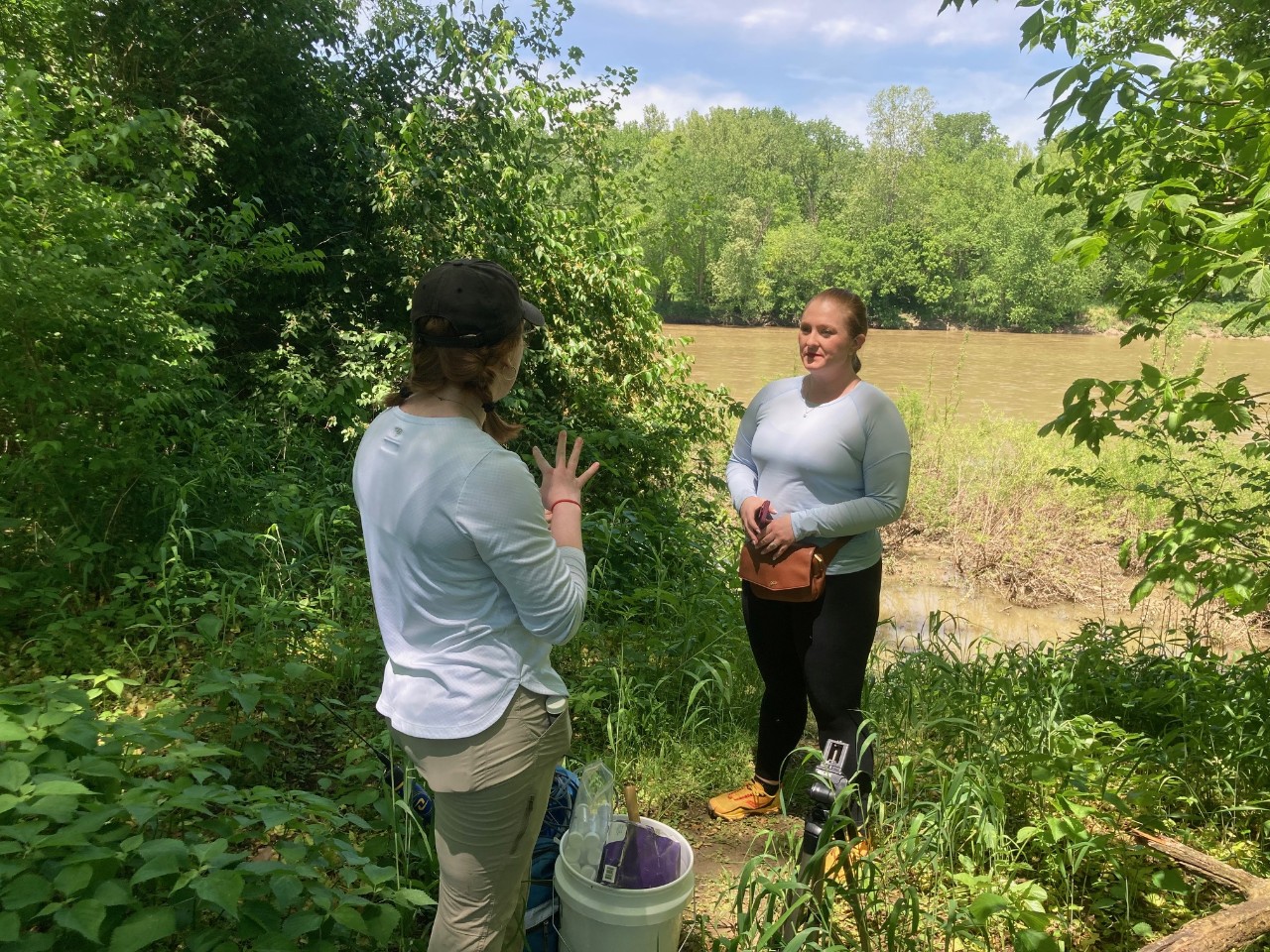
Featured image at top: UC doctoral student Megan Naber, left, talks to Spectrum News reporter Alese Underwood on the banks of the Great Miami River where UC is studying groundwater. Photo/Michael Miller

UC students collect water samples from wells along the Great Miami River. Photo/Andrew Higley/UC Marketing + Brand
Related Stories
‘Designer drug’ shows early neuroprotective signal in acute ischemic stroke
October 28, 2025

Medscape highlighted new trial results led by the University of Cincinnati's Eva Mistry that found an experimental drug shows promise in protecting injured brain cells for patients with acute ischemic stroke.
Is menstrual fluid ‘the most overlooked opportunity’ in women’s health?
October 27, 2025

The Guardian recently reported that period blood has long been thought of as ‘stinky and useless’, but startups are exploring using the fluid to test for a wide range of health conditions — including endometriosis.
What is squalane, and how does it work to moisturize skin?
October 27, 2025

The University of Cincinnati's Kelly Dobos was featured in a Women's Health article discussing squalane, an ingredient being increasingly used in moisturizing skincare products.