University of Cincinnati study looks at recovery of kidney use
Silvi Shah, MD, talks to Local 12 about a new predictive recovery scoring model for kidney patients

Individuals who lose kidney function due to acute kidney injury (AKI) do sometimes recover kidney function, explains Silvi Shah, MD, associate professor in the Division of Nephrology at the UC College of Medicine.
Shah spoke with Local 12’s Liz Bonis about a scoring model she and other researchers have created that uses key health indicators to predict recovery for patients who suffer kidney failure due to AKI. The scoring model found that 24% and 34% of patients with kidney failure due to AKI recovered kidney function within 90 days and 12 months respectively. Their observational study used information from the United States Renal Data System to make predictions.
“Acute kidney injury is a major contributor of end-stage-kidney disease and our study looked at factors that could predict recovery in patients who have kidney failure due to dialysis,” Shah told Local 12 listeners. “What we found is that we looked at 22,000 patients over a period of nine years and found around one fourth of those patients recover within 90 days and about one third of those patients recover in 12 months.”
Patients' factors such as the age, race or ethnicity, body mass index, congestive heart failure, cancer, amputation, functional status, hemoglobin and prior nephrology care were used in a regression model for predictions.
Listen to her interview on Local 12 News online. Shah's segment airs from 35:18 to 41 minutes.
Read more about her latest research online.
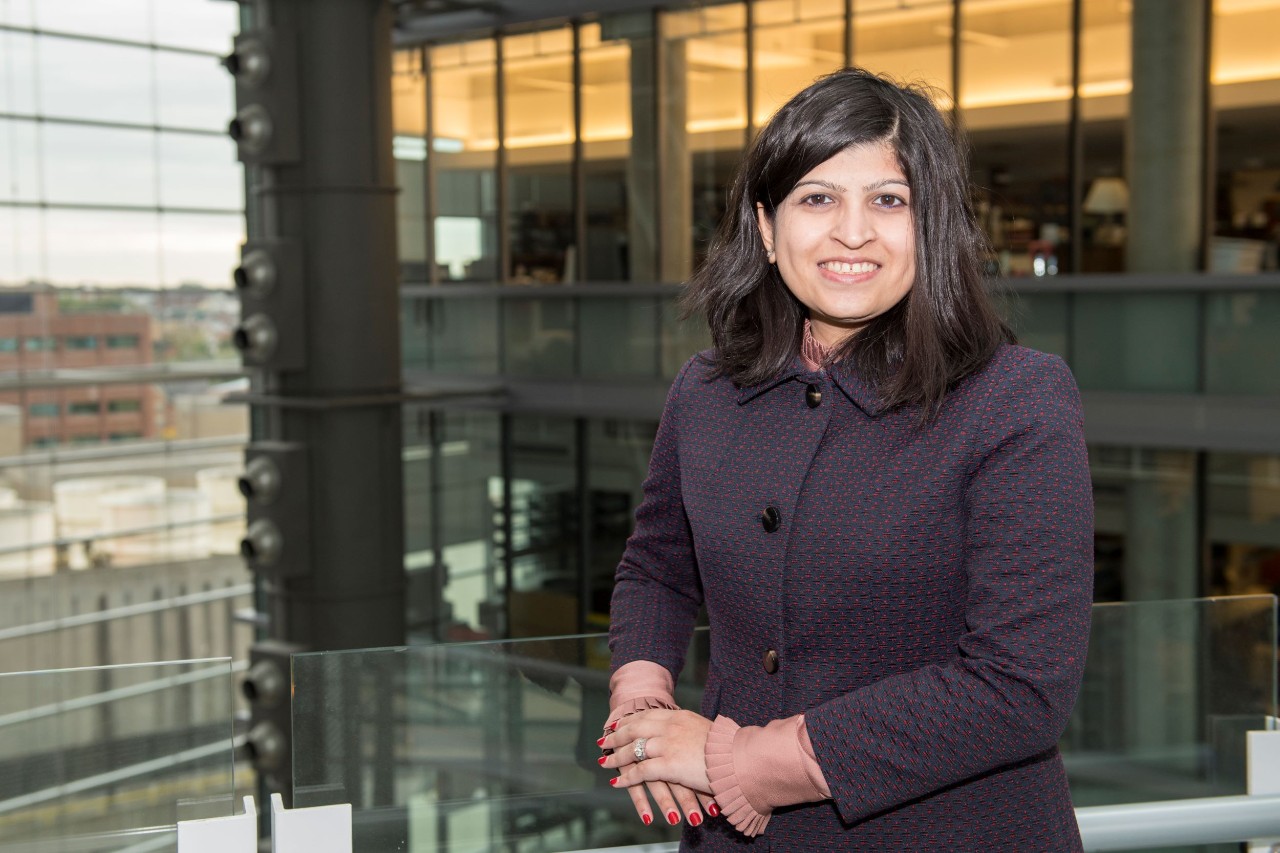
Featured top image of Silvi Shah, MD, taken by Colleen Kelley/UC Marketing + Brand.
Related Stories
‘Designer drug’ shows early neuroprotective signal in acute ischemic stroke
October 28, 2025

Medscape highlighted new trial results led by the University of Cincinnati's Eva Mistry that found an experimental drug shows promise in protecting injured brain cells for patients with acute ischemic stroke.
Is menstrual fluid ‘the most overlooked opportunity’ in women’s health?
October 27, 2025

The Guardian recently reported that period blood has long been thought of as ‘stinky and useless’, but startups are exploring using the fluid to test for a wide range of health conditions — including endometriosis.
What is squalane, and how does it work to moisturize skin?
October 27, 2025

The University of Cincinnati's Kelly Dobos was featured in a Women's Health article discussing squalane, an ingredient being increasingly used in moisturizing skincare products.