Ozempic-like weight loss drugs may protect against Alzheimer's
UC expert comments on new research to NBC News

The University of Cincinnati's Alberto Espay, MD, was featured in a NBC News article commenting on new research that found a weight loss drug similar to Ozempic appeared to slow cognitive decline in patients with mild Alzheimer’s disease.
The research, presented Tuesday at the Alzheimer’s Association International Conference in Philadelphia, focused on liraglutide, the active ingredient used in some GLP-1 drugs. GLP-1 agonists are a class of medications that includes the popular diabetes and weight loss drugs Ozempic and Wegovy.
The midstage clinical trial included about 200 people in the United Kingdom who got daily injections of either liraglutide or a placebo. After one year, cognitive decline in the patients who got liraglutide had slowed by as much as 18% compared to those who didn’t get the drug, based on the Alzheimer’s Disease Assessment Scale, which tracks the progression of the disease by assessing memory, language, skills, understanding and reasoning abilities.
Espay said the fact that GLP-1s appear to help protect the brain makes sense, as Alzheimer's is thought to be a "syndrome of many diseases caused by different biological, toxic or infectious exposures.”
“This looks promising," said Espay, professor of neurology in the UC College of Medicine and director and endowed chair of the James J. and Joan A. Gardner Family Center for Parkinson’s Disease and Movement Disorders at the UC Gardner Neuroscience Institute. "If this is replicated in a phase 3 trial, it could become the first truly disease-modifying treatment in Alzheimer’s disease.”
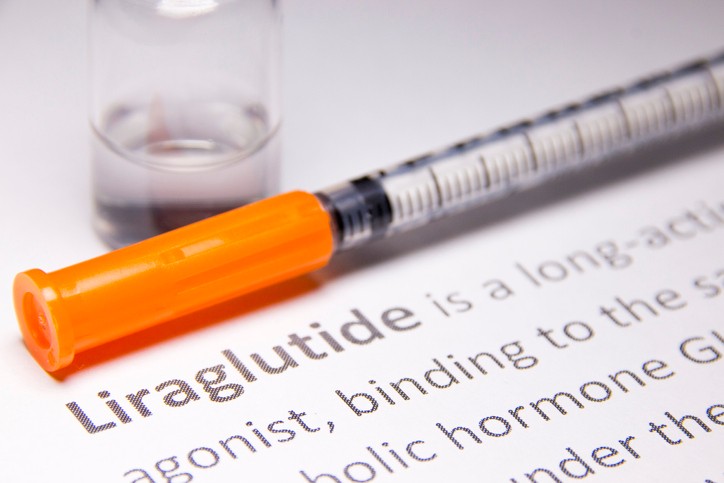
Featured photo at top of liraglutide injection pen. Photo/Hailshadow/iStock.
Related Stories
‘Designer drug’ shows early neuroprotective signal in acute ischemic stroke
October 28, 2025

Medscape highlighted new trial results led by the University of Cincinnati's Eva Mistry that found an experimental drug shows promise in protecting injured brain cells for patients with acute ischemic stroke.
Is menstrual fluid ‘the most overlooked opportunity’ in women’s health?
October 27, 2025

The Guardian recently reported that period blood has long been thought of as ‘stinky and useless’, but startups are exploring using the fluid to test for a wide range of health conditions — including endometriosis.
What is squalane, and how does it work to moisturize skin?
October 27, 2025

The University of Cincinnati's Kelly Dobos was featured in a Women's Health article discussing squalane, an ingredient being increasingly used in moisturizing skincare products.