Tracking disaster misinformation
UC journalism professor talks to Bloomberg News about political disinformation

Bloomberg's Balance of Power podcast turned to a University of Cincinnati journalism professor to explain why natural disasters in the United States are spawning so much more misinformation on social media.
UC College of Arts and Sciences Professor Jeffrey Blevins told Bloomberg News that the goal of many false posts is to undermine opponents in the presidential election race.
“When we think about misinformation, we should consider the term disinformation. We have entities putting false information out there for political purposes to undermine the credibility of government institutions and our credible news outlets,” Blevins told Bloomberg.
Elon Musk, the billionaire owner of the social media site X, has been promoting unsubstantiated rumors about the storm, hurricane Helene, that devastated North Carolina such as that the Federal Emergency Management Agency spent all of its budget on helping undocumented immigrants instead of storm victims.
“At the very least, he should take more responsibility for what he shares,” Blevins said.
Blevins is the author of the 2024 book “Social Media and Digital Politics: Networked Reason in an Age of Digital Emotion.”
Bloomberg host Joe Matheiu noted that lies and unsubstantiated rumors can get millions of views on social media before any subsequent posts can dispel the disinformation.
Listen to Bloomberg's Balance of Power episode.
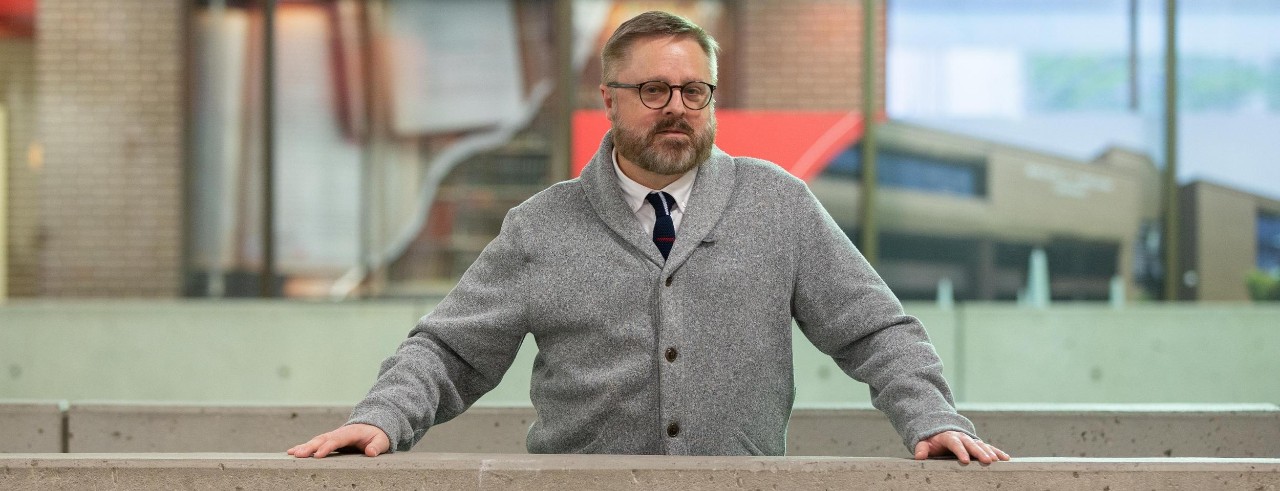
Featured image at top: UC School of Public and International Affairs Professor Jeffrey Blevins spoke to Bloomberg News about how social media is brimming with disaster-related misinformation. Photo/Andrew Higley/UC Marketing + Brand
Related Stories
‘Designer drug’ shows early neuroprotective signal in acute ischemic stroke
October 28, 2025

Medscape highlighted new trial results led by the University of Cincinnati's Eva Mistry that found an experimental drug shows promise in protecting injured brain cells for patients with acute ischemic stroke.
Is menstrual fluid ‘the most overlooked opportunity’ in women’s health?
October 27, 2025

The Guardian recently reported that period blood has long been thought of as ‘stinky and useless’, but startups are exploring using the fluid to test for a wide range of health conditions — including endometriosis.
What is squalane, and how does it work to moisturize skin?
October 27, 2025

The University of Cincinnati's Kelly Dobos was featured in a Women's Health article discussing squalane, an ingredient being increasingly used in moisturizing skincare products.