The surprising strategies animals use to survive winter
UC biologist talks to National Geographic about how spiders and insects withstand the cold

National Geographic turned to a University of Cincinnati biologist to learn how insects and spiders survive winter's cold, snow and ice.
UC College of Arts and Sciences Professor Emeritus George Uetz told National Geographic that wolf spiders burrow into the soil or take shelter under heavy layers of leaf litter or even deep inside logs to get out of the bracing cold.
“The difference in temperature between a frozen surface of snow or ice and just a few inches below cover is often surprising,” said Uetz, a behavioral ecologist who spent his career learning about the fascinating behavior of spiders.
“Many spiders and insects are active in this ‘subnivean’ environment, which is sometimes a few degrees above freezing.”
Spiders produce no body heat of their own. Their metabolism slows when the temperatures drop.
“Even so, it’s not uncommon to see spiders and insects active on warm (winter) days,” Uetz said.
Uetz was recognized by the Animal Behavior Society for his lab's many insights into animal behavior. In his lab, Uetz pioneered the use of technology to unlock the secrets of spider behavior. For example, he discovered that spiders react to projected two-dimensional images of other spiders, which allowed him and his students to fashion many new experiments to learn more about their intricate courtship rituals.
Read the National Geographic story.
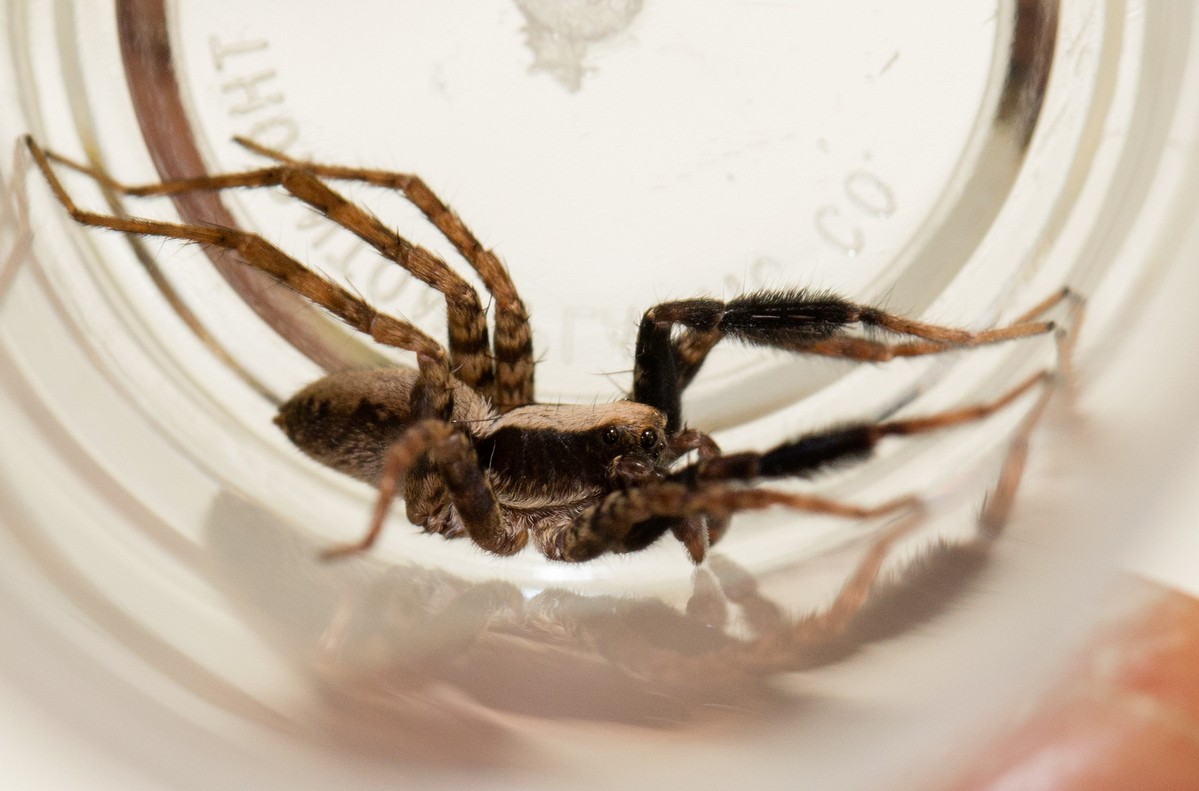
Featured image at top: A wolf spider in a UC biology lab. Photo/Joseph Fuqua II/UC

National Geographic talked to Professor Emeritus about how spiders survive the long winter. Photo/Lisa Ventre/UC
Related Stories
‘Designer drug’ shows early neuroprotective signal in acute ischemic stroke
October 28, 2025

Medscape highlighted new trial results led by the University of Cincinnati's Eva Mistry that found an experimental drug shows promise in protecting injured brain cells for patients with acute ischemic stroke.
Is menstrual fluid ‘the most overlooked opportunity’ in women’s health?
October 27, 2025

The Guardian recently reported that period blood has long been thought of as ‘stinky and useless’, but startups are exploring using the fluid to test for a wide range of health conditions — including endometriosis.
What is squalane, and how does it work to moisturize skin?
October 27, 2025

The University of Cincinnati's Kelly Dobos was featured in a Women's Health article discussing squalane, an ingredient being increasingly used in moisturizing skincare products.