Chlorine plus UV light can detoxify water affected by harmful algae blooms
UC engineers study ways to protect drinking water

Phys.Org and other science and engineering outlets highlighted a new study by the University of Cincinnati that examined cost-effective methods to protect drinking water from harmful algae blooms.
Blue-green algae can reproduce in waters laden with nitrogen, phosphorus or other excess nutrients, said Minghao Kong, a doctoral graduate of UC's College of Engineering and Applied Science.
Now at Emory University, Kong was lead author of a paper examining the use of chlorine and ultraviolet light to treat and detoxify water contaminated with cyanotoxins from blue green algae.
The study was published in the journal Environmental Science & Technology.
Kong said researchers have been looking at new ways to mitigate the problem after algae blooms threatened sources of public drinking water, as happened in Toledo in 2014 when the city issued a do-not-drink order to 500,000 residents. Similar incidents close beaches and lakes every year in the United States.
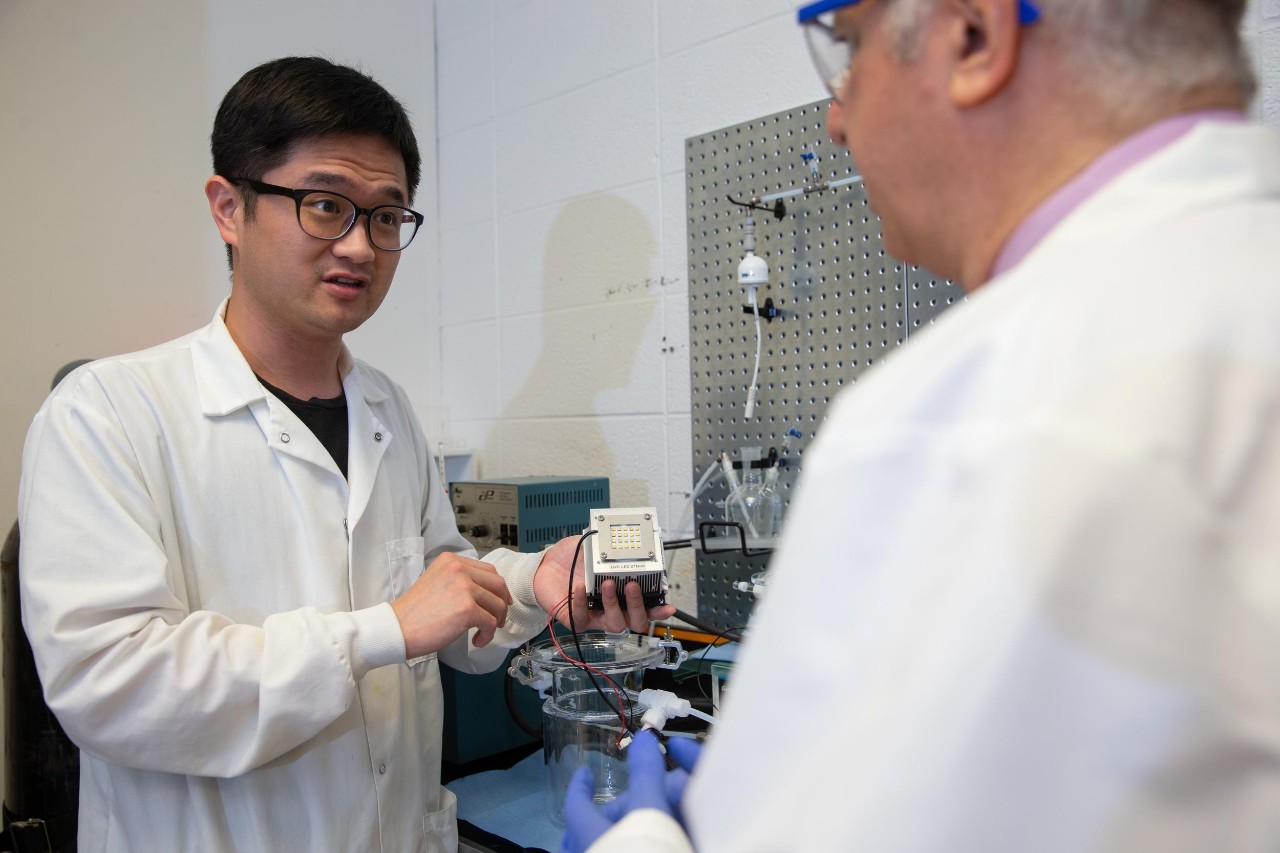
Featured image at top: UC doctoral graduate Minghao Kong talks to the late UC Professor Dionysios Dionysiou in this 2022 file photo. Photo/Andrew Higley/UC Marketing + Brand

The late UC Professor Dionysios Dionysiou, left, and UC doctoral graduate Minghao Kong work on a project to detect and treat cyanotoxins in drinking water in this 2022 photo. Photo/Andrew Higley/UC Marketing + Brand
More UC environmental engineering in the news

UC's Mantei Center is one of several Uptown Campus facilities dedicated to students in the College of Engineering and Applied Science. Photo/Andrew Higley/UC Marketing + Brand
Related Stories
‘Designer drug’ shows early neuroprotective signal in acute ischemic stroke
October 28, 2025

Medscape highlighted new trial results led by the University of Cincinnati's Eva Mistry that found an experimental drug shows promise in protecting injured brain cells for patients with acute ischemic stroke.
Is menstrual fluid ‘the most overlooked opportunity’ in women’s health?
October 27, 2025

The Guardian recently reported that period blood has long been thought of as ‘stinky and useless’, but startups are exploring using the fluid to test for a wide range of health conditions — including endometriosis.
What is squalane, and how does it work to moisturize skin?
October 27, 2025

The University of Cincinnati's Kelly Dobos was featured in a Women's Health article discussing squalane, an ingredient being increasingly used in moisturizing skincare products.