UC student research targets tick-borne illness
Nigerian student works to address Lyme disease

The Guardian highlighted student biology research that is pursuing pesticide-free ways of preventing tick-borne illness.

A dog tick in a UC biology lab. UC is studying ways to address tick-borne illness. Photo/Jay Yocis/UC
In UC College of Arts and Sciences Professor Joshua Benoit's lab, doctoral student Kosisochukwu Onyeagba is studying how to exploit a tick's ability to sense humidity to kill them. Ticks use a specialized organ to find refuge to survive dry conditions.
But if researchers find a way to disrupt the organ, the tick will die from dehydration.
“The idea is to outsmart them, not just eliminate them,” Onyeagba told the Guardian. “We’re targeting behavior, not biology. No toxicity. No resistance.”
Nearly a half-million people in the United States contract Lyme disease each year, according to the Centers for Disease Control and Prevention. The disease is most prevalent in the Northeast but it has been reported in all 50 states.
Onyeagba was a co-author on a study published in BioRxix, a pre-print server that allows researchers to share results and solicit feedback before pursuing publication in a peer-reviewed journal.
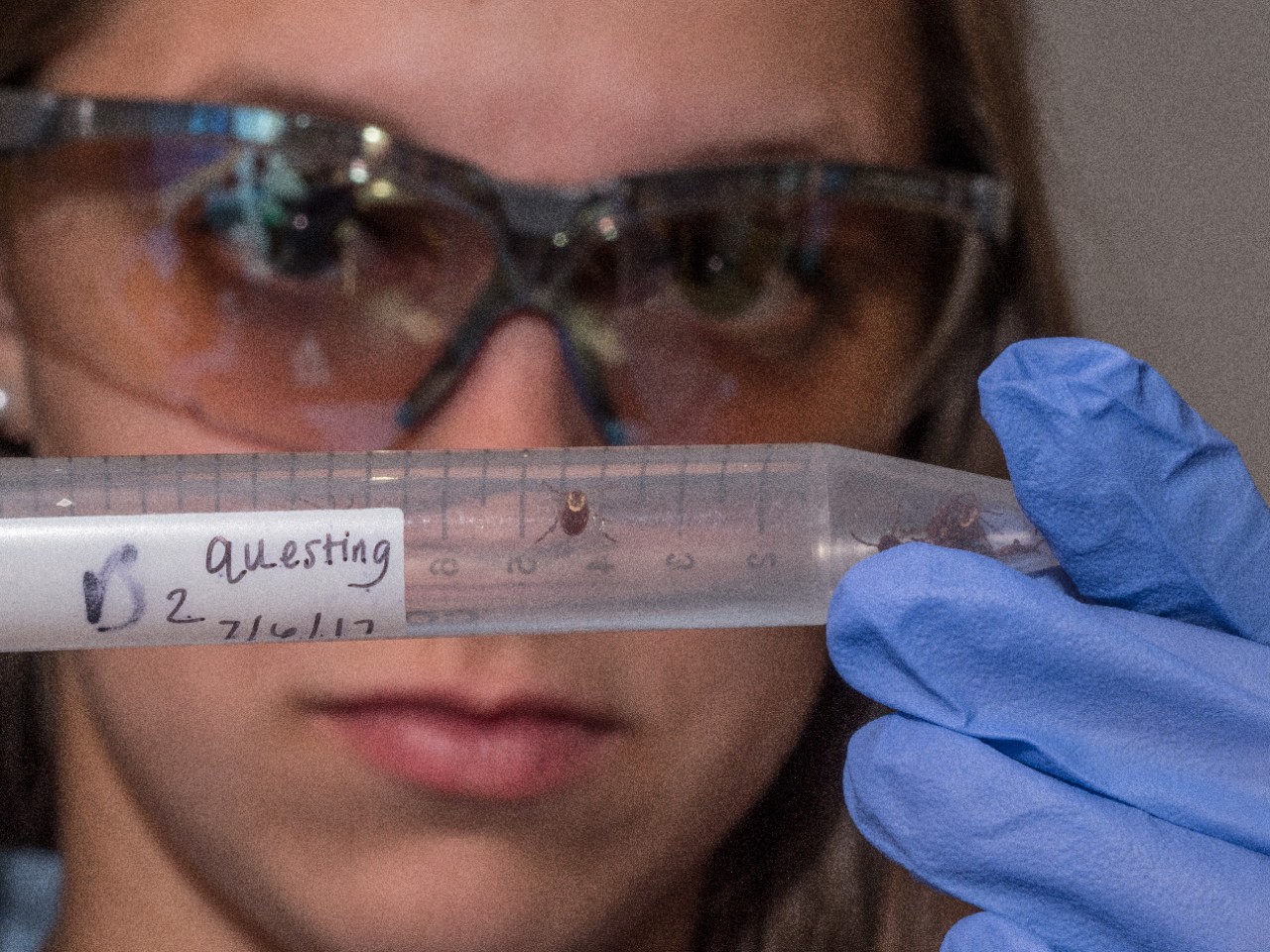
Featured image at top: UC biology students are studying ways to prevent tick-borne illness. Photo/Joseph Fuqua II/UC
Related Stories
‘Designer drug’ shows early neuroprotective signal in acute ischemic stroke
October 28, 2025

Medscape highlighted new trial results led by the University of Cincinnati's Eva Mistry that found an experimental drug shows promise in protecting injured brain cells for patients with acute ischemic stroke.
Is menstrual fluid ‘the most overlooked opportunity’ in women’s health?
October 27, 2025

The Guardian recently reported that period blood has long been thought of as ‘stinky and useless’, but startups are exploring using the fluid to test for a wide range of health conditions — including endometriosis.
What is squalane, and how does it work to moisturize skin?
October 27, 2025

The University of Cincinnati's Kelly Dobos was featured in a Women's Health article discussing squalane, an ingredient being increasingly used in moisturizing skincare products.