Romans traded exotic animals across empire
UC Classics professor finds giraffe bone at Pompeii

MSN highlighted excavations by the University of Cincinnati at the ancient city of Pompeii that turned up evidence of an exotic animal trade 2,000 years ago.
UC Classics Professor Steven Ellis led excavations of the Porta Stabia neighborhood in Pompeii, which was entombed in ash from the eruption of Mount Vesuvius in 79 A.D.
The neighborhood Ellis uncovered was a retail district consisting of nearly a dozen properties across two multilevel structures just inside one of Pompeii’s seven main entrance gates. The buildings contained retail shops and entertainment spaces where generations before stood the workshops of skilled trades workers.

A fifth century mosaic from Syria or Lebanon now at the Art Institute of Chicago shows a keeper leading a giraffe. Photo/Sailko/Wikimedia Commons
The site has provided archaeologists with a bonanza of information about this ancient civilization because it preserved hundreds of thousands of artifacts across more than 1,000 city properties.
An examination of drains used by restaurants and kitchens in the neighborhood revealed the ancient diet of city residents to Ellis and his international research team. This included menu items such as grains, local fruits, nuts, olives, beans, local fish and chicken eggs along with imported items such as shellfish, sea urchin and exotic spices like sesame seeds and peppercorns imported from far beyond the city.
The strangest discovery was a butchered leg of a giraffe, the provenance of which is a subject of debate.
Giraffes were found across much of arid North Africa, including places like Morocco, Libya and Egypt, before they disappeared there about 1,400 years ago.
By analyzing the food scraps found in the buildings, they recreated the menu at the restaurants. In one, they find evidence of locally harvested seafood, meats, grains and vegetables. But at another establishment, they find a richer variety of foods, ingredients and spices, some imported from distant places.
“They have both more and a greater range of everything — higher priced cuts of meat, a greater range of seafood and more interesting flavorings,” Ellis said.
The MSN story originally appeared in the Times of India.
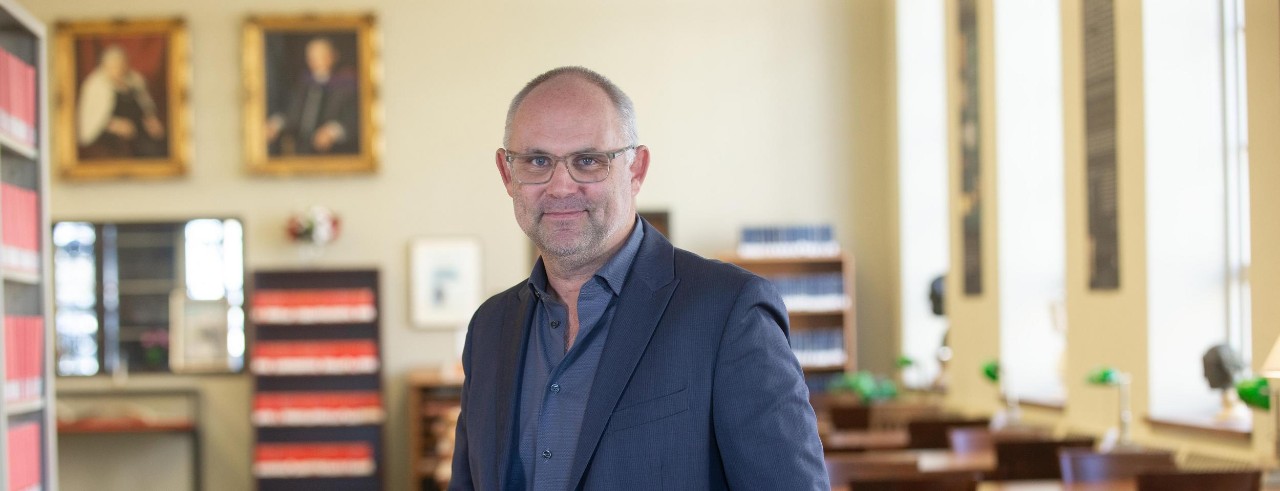
Featured image at top: UC Classics Professor Steven Ellis led excavations at Pompeii with an international team of researchers who discovered more about the lives of people in the Porta Stabia neighborhood. Photo/Andrew Higley/UC Marketing + Brand

UC Classics Professor Steven Ellis published the first volume on his team's excavation's of the Porta Stabia neighborhood in Pompeii. Photo/Andrew Higley/UC Marketing + Brand
More UC Classics in the news

The hilt of a sword was found in the tomb of the Griffin Warrior in Pylos, Greece, by UC Classics Professor Jack Davis and Senior Research Associate Sharon Stocker. Photo/Jeff Vanderpool/UC Classics
Related Stories
‘Designer drug’ shows early neuroprotective signal in acute ischemic stroke
October 28, 2025

Medscape highlighted new trial results led by the University of Cincinnati's Eva Mistry that found an experimental drug shows promise in protecting injured brain cells for patients with acute ischemic stroke.
Is menstrual fluid ‘the most overlooked opportunity’ in women’s health?
October 27, 2025

The Guardian recently reported that period blood has long been thought of as ‘stinky and useless’, but startups are exploring using the fluid to test for a wide range of health conditions — including endometriosis.
What is squalane, and how does it work to moisturize skin?
October 27, 2025

The University of Cincinnati's Kelly Dobos was featured in a Women's Health article discussing squalane, an ingredient being increasingly used in moisturizing skincare products.