The secret life of potholes
UC engineer puts pothole fixes to the test

It might not come as a surprise to drivers used to the shake, rattle and roll of storm-damaged roads, but not all pothole repairs are created equal.
Cleveland.com highlighted work by a University of Cincinnati engineering professor to find out just which solutions work best for winter-damaged roads.
UC College of Engineering and Applied Science Professor Munir Nazzal and his students spent the winter of 2021 following roads departments as they repaired 686 potholes in four cities across Ohio. Crews used nine different materials or combinations to fill them.
Researchers found that no single material worked best for every weather condition or road surface. And the cost of repairs can vary depending on the materials and methods used.
“You cannot control when it will snow, when it will freeze, you cannot control anything like that,” Nazzal told Cleveland.com. “What you can control is basically making sure that you’re putting the effort to select the right material and the right procedure.”
Nazzal is director of UC's Center for Smart, Sustainable and Resilient Infrastructure.
Subsequently, he and his students have conducted related studies examining better ways to fix damaged roads. Often, the best repair is prevention — sealing road cracks to keep ice from heaving the surface.
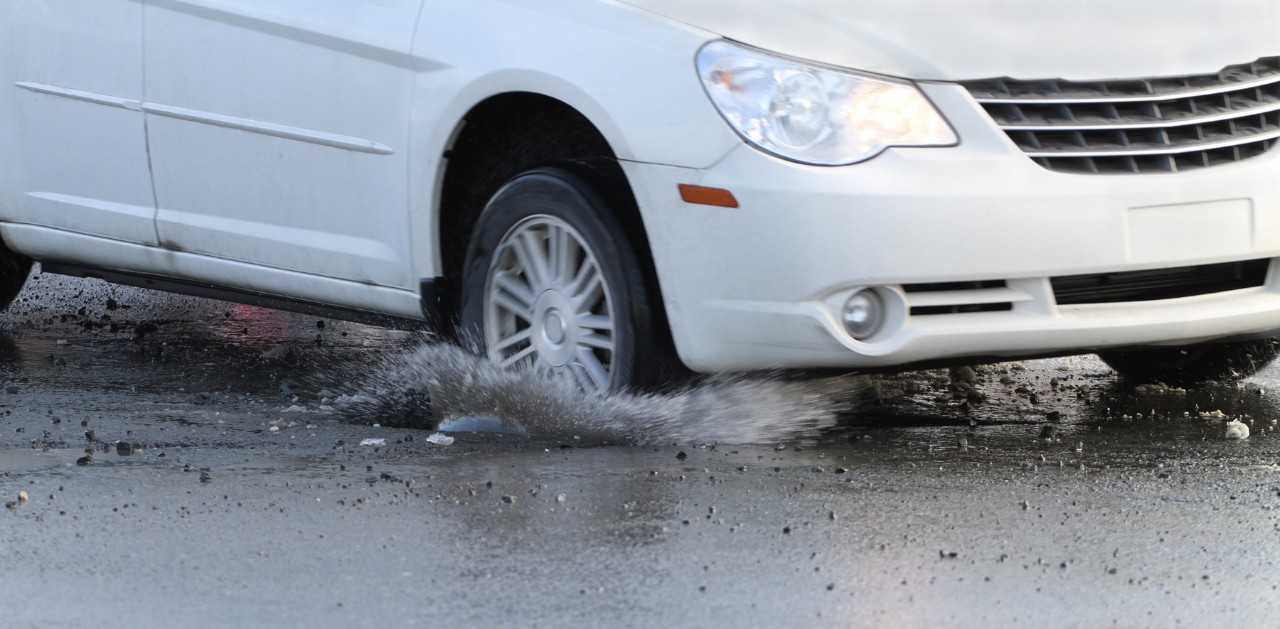
Featured image at top: University of Cincinnati Professor Munir Nazzal studies the most effective ways to repair storm-damaged roads. Photo/kozmoat98/istockphoto

UC College of Engineering and Applied Science Professor Munir Nazzal poses in the high-bay lab at UC's Digital Futures. He is director of UC's Center for Smart, Sustainable and Resilient Infrastructure. Photo/Andrew Higley/UC Marketing + Brand
Related Stories
‘Designer drug’ shows early neuroprotective signal in acute ischemic stroke
October 28, 2025

Medscape highlighted new trial results led by the University of Cincinnati's Eva Mistry that found an experimental drug shows promise in protecting injured brain cells for patients with acute ischemic stroke.
Is menstrual fluid ‘the most overlooked opportunity’ in women’s health?
October 27, 2025

The Guardian recently reported that period blood has long been thought of as ‘stinky and useless’, but startups are exploring using the fluid to test for a wide range of health conditions — including endometriosis.
What is squalane, and how does it work to moisturize skin?
October 27, 2025

The University of Cincinnati's Kelly Dobos was featured in a Women's Health article discussing squalane, an ingredient being increasingly used in moisturizing skincare products.