Making sense of the U.S. Supreme Court’s rulings during its final week in session
UC Law’s Anne Lofaso shares her analysis with WXVU

The U.S. Supreme Court gave President Donald Trump a wave of victories in the final week of its session. The high court sided with the president to limit universal injunctions issued by federal court.
WVXU spoke with Anne Lofaso, professor at the University of Cincinnati College of Law, about what the court’s decisions will mean for birthright citizenship, LGBTQ+ books in public schools and more a segment of Cincinnati Edition.
The Supreme Court in a June 27 ruling granted the administration’s request to partially stop nationwide injunction blocking an executive order ending birthright citizenship for certain people born in the United States.
Writing for the majority, Justice Amy Coney Barrett said “universal injunctions” issued by district judges “likely exceed the equitable authority that Congress has given to federal courts.”
“It didn’t rule on the merits, which means it did not talk about whether the President’s executive orders were actually constitutional,” Lofaso told WVXU. “It only ruled on whether or not an individual district court judge could actually issue a universal or what’s called a nationwide injunction. So the court said this is almost certainly not within the power of a district court and therefore it gave the president a limited victory.”
The Supreme Court also ruled that school systems are required to offer parents an ‘opt-out’ provision that allows their children to be excused from class if course material conflicts with religious beliefs. The case arose when a group of parents in Montgomery County, Maryland sued the school board seeking an opt out for elementary students when reading material included books on LGBTQ characters.
Lofaso, a former attorney for the National Labor Review Board, teaches constitutional law, employment law and labor law.
Listen to the WVXU segment on Supreme Court rulings online.
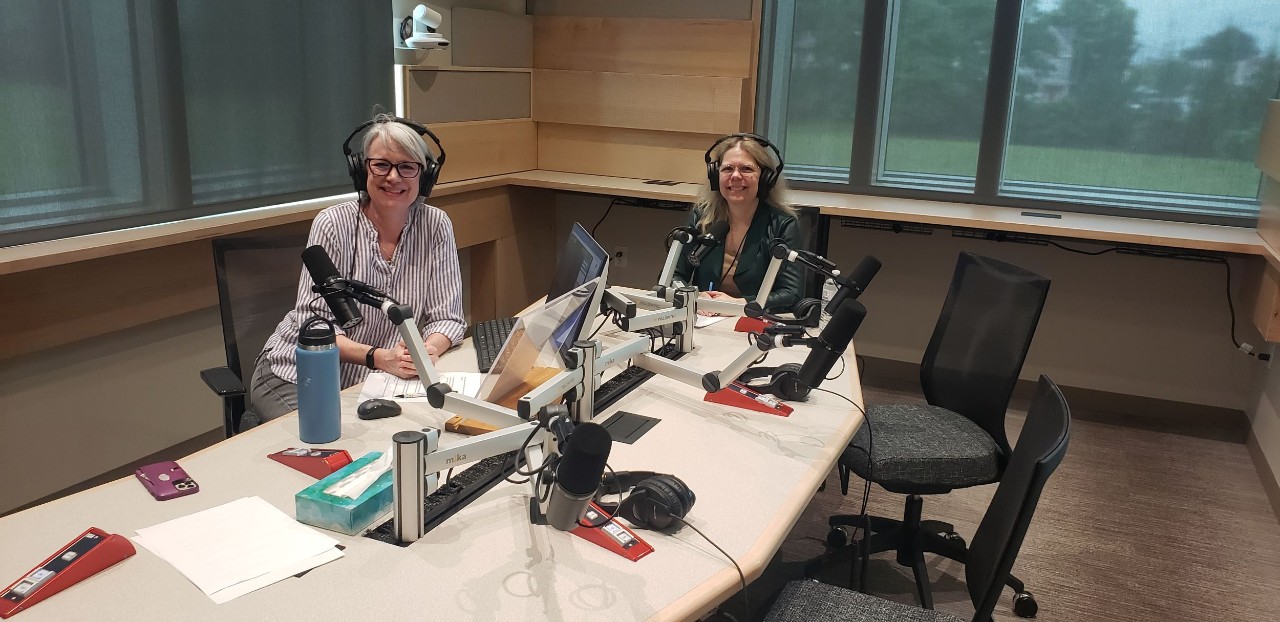
Featured top image of WVXU Journalist Lucy May and UC Law's Anne Lofaso in studio. Photo provided.
Related Stories
‘Designer drug’ shows early neuroprotective signal in acute ischemic stroke
October 28, 2025

Medscape highlighted new trial results led by the University of Cincinnati's Eva Mistry that found an experimental drug shows promise in protecting injured brain cells for patients with acute ischemic stroke.
Is menstrual fluid ‘the most overlooked opportunity’ in women’s health?
October 27, 2025

The Guardian recently reported that period blood has long been thought of as ‘stinky and useless’, but startups are exploring using the fluid to test for a wide range of health conditions — including endometriosis.
What is squalane, and how does it work to moisturize skin?
October 27, 2025

The University of Cincinnati's Kelly Dobos was featured in a Women's Health article discussing squalane, an ingredient being increasingly used in moisturizing skincare products.