Power-hungry AI could mean higher electric bills
The Baltimore Sun looks at how data centers get their energy

Large data centers continue to pop up across the country as big tech companies race to offer the best in generative artificial intelligence, or generative AI. According to the Baltimore Sun, data centers could account for as much as 12 percent of all U.S. electricity within five years.
The Baltimore Sun spoke with Jeffrey Shaffer, director of Lindner College of Business’ Applied AI Lab, for insights on AI’s energy impact. Shaffer said that AI is expected to contribute trillions to the global economy and play a role in addressing climate change.
“It’s a paradigm shift, probably more so than the concept of the Internet or the gasoline engine,” Shaffer told the Baltimore Sun. “We don’t yet know what that impact on society is. It’s going to be ubiquitous. It’s going to be in everything we do.”
According to the Baltimore Sun, data centers are already raising energy costs for some consumers. Some experts told the news outlet that nuclear energy is the future for powering AI and keeping energy green. Others are looking for ways to control consumer price increases from traditional power sources. But Shaffer argues AI is still too new to accurately predict how much energy it will need.
“I’m not coming from the camp of we should ignore the energy aspect of it, but I think we just need to recognize we’re in a fluctuating period right now where people are trying to figure it out,” said Shaffer. “When the models get more advanced, we’re going to get to the point where the models can improve upon themselves without the humans.”
Read the full story at the Baltimore Sun.
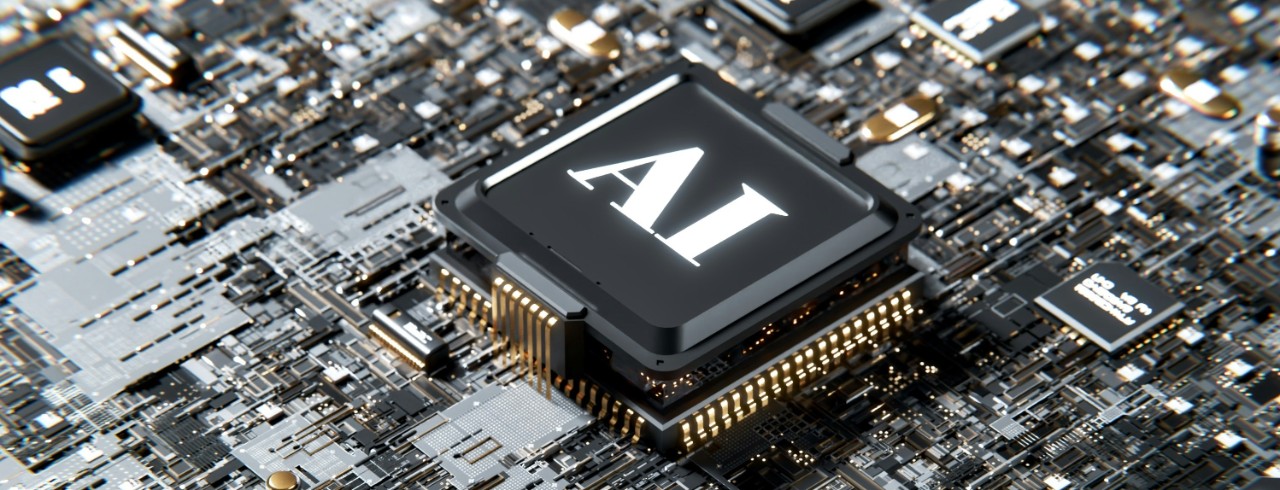
Featured image at top of a chip in a motherboard labeled "AI." Photo/Unsplash.
Related Stories
‘Designer drug’ shows early neuroprotective signal in acute ischemic stroke
October 28, 2025

Medscape highlighted new trial results led by the University of Cincinnati's Eva Mistry that found an experimental drug shows promise in protecting injured brain cells for patients with acute ischemic stroke.
Is menstrual fluid ‘the most overlooked opportunity’ in women’s health?
October 27, 2025

The Guardian recently reported that period blood has long been thought of as ‘stinky and useless’, but startups are exploring using the fluid to test for a wide range of health conditions — including endometriosis.
What is squalane, and how does it work to moisturize skin?
October 27, 2025

The University of Cincinnati's Kelly Dobos was featured in a Women's Health article discussing squalane, an ingredient being increasingly used in moisturizing skincare products.