
Spiders as pets? Some people say yes
Spiders as pets? Some people say yes
UC expert talks about the appeal of jumping spiders

NPR turned to a spider expert at the University of Cincinnati to learn more about the appeal of jumping spiders that some people keep as pets.
According to NPR, even people who once were afraid of spiders have learned to love having jumping spiders as companions. Social media has a robust community of spider-loving pet owners who share videos of their furry friends.
UC College of Arts and Sciences Associate Professor Nathan Morehouse has studied the unique sensory abilities of spiders around the world. He said jumping spiders typically don't build webs but actively hunt their prey, which requires keen senses.
“These animals are working with a brain about the size of a poppy seed. So it's tiny. And the complexity of their behavior is surprising given how small their brains are,“ Morehouse told NPR.
Jumping spiders have keen color vision. They execute a hunting strategy, he said.
“They really do act like little cats in a certain way as they stalk things and play with things and move around,“ he said.
Most recently, Morehouse and his students examined why some jumping spiders try to mimic predatory insects such as wasps and praying mantises. The ruse was good enough to fool artificial intelligence in experiments. They say the spiders might use the ruse to attract the attention of females before breaking the illusion to court them.
Featured image at top: NPR says more people are buying jumping spiders as pets. Photo/Joseph Fuqua II/UC

UC Associate Professor Nathan Morehouse studies the sensory abilities of animals such as spiders in his biology lab. Photo/Jay Yocis/UC
More UC Biology in the news
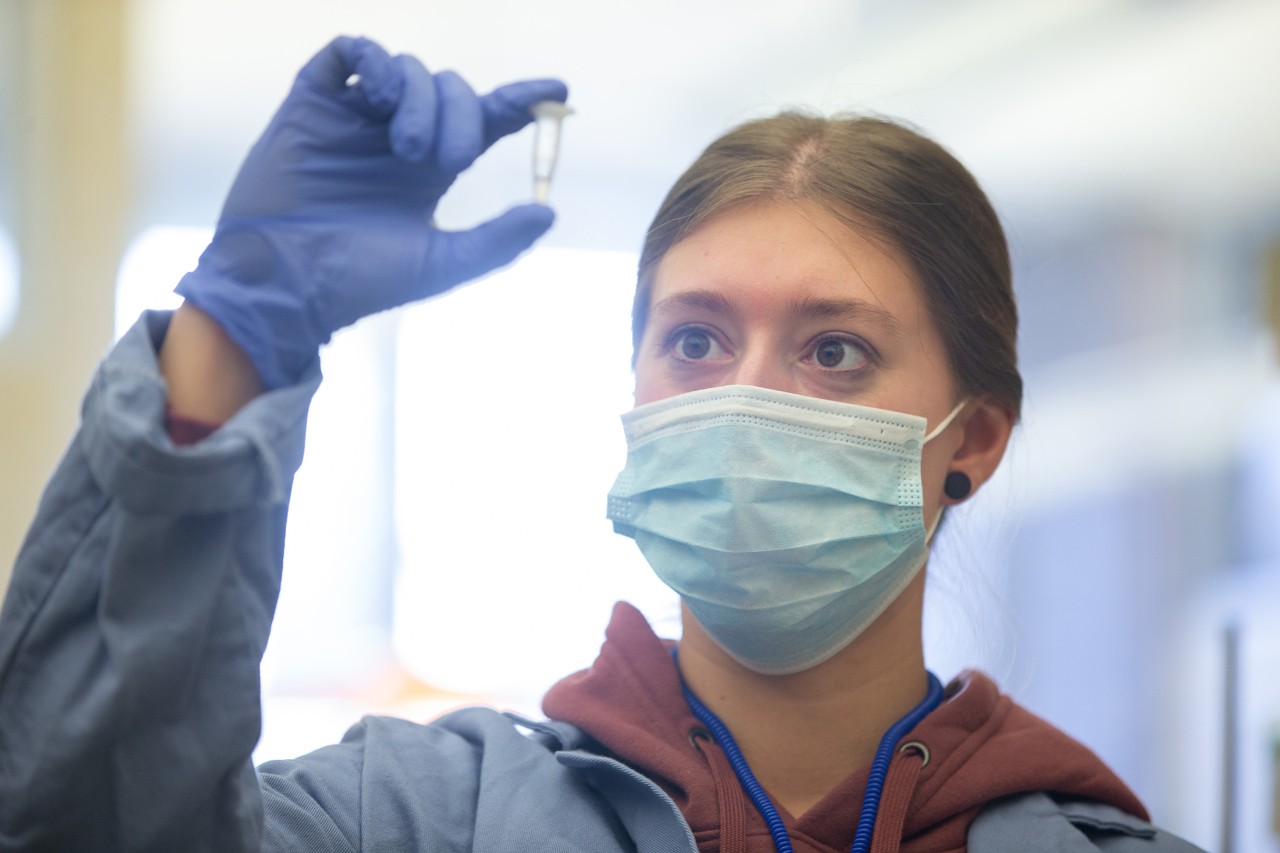
UC students study ways to combat mosquito-borne illness in a biology lab. Photo/Andrew Higley/UC
Related Stories
UC launches Bearcats Affordability Grant
January 7, 2026
The University of Cincinnati is making college more attainable for students across Ohio with the creation of the Bearcats Affordability Grant. The new grant will provide a pathway to tuition-free college for students of families who make less than $75,000 per year. Beginning in fall 2026, the Bearcats Affordability Grant will cover the remaining cost of tuition for Ohio residents who are Pell eligible.
‘Designer drug’ shows early neuroprotective signal in acute ischemic stroke
October 28, 2025

Medscape highlighted new trial results led by the University of Cincinnati's Eva Mistry that found an experimental drug shows promise in protecting injured brain cells for patients with acute ischemic stroke.
Is menstrual fluid ‘the most overlooked opportunity’ in women’s health?
October 27, 2025

The Guardian recently reported that period blood has long been thought of as ‘stinky and useless’, but startups are exploring using the fluid to test for a wide range of health conditions — including endometriosis.